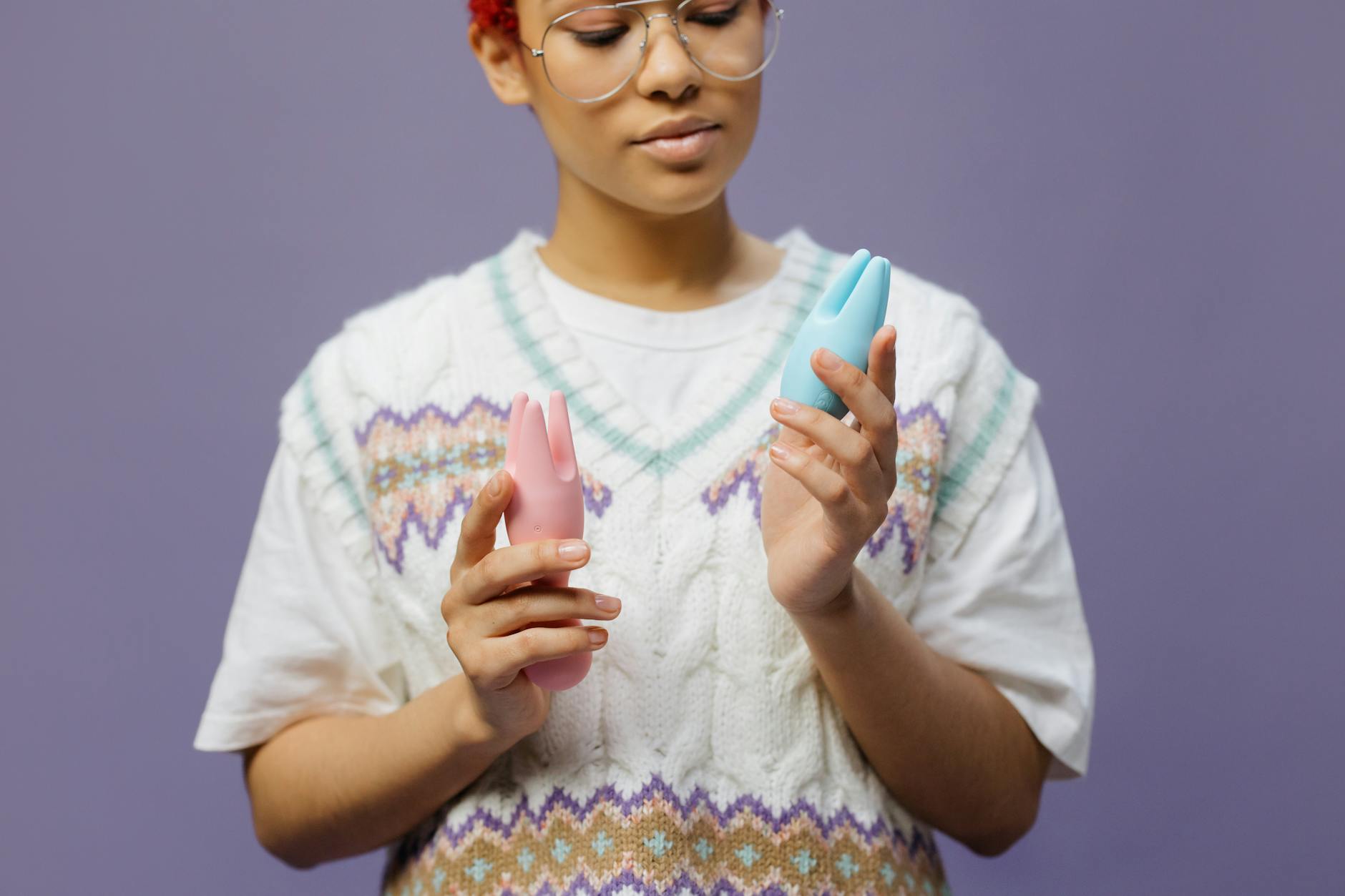
The mismatch nobody talks about
Honestly, this is the tension that lives in so many relationships but barely gets mentioned. One person wants more intensity, more frequency, more sensation. The other person doesn't. Not because they don't care. Not because something's broken. They just have different nervous systems, different arousal curves, different thresholds for what feels good.
When that gap exists and nobody addresses it, resentment builds fast. The high-desire partner feels rejected. The lower-intensity partner feels pressured. Both feel misunderstood. Neither gets what they actually want.
Here's the thing: a lemon clitoral vibrator isn't a magic fix. But it is a tool that can help bridge that gap in ways that manual touch, partnered effort, or traditional vibrators often can't.
Why lemon vibrators work differently in this dynamic
A lemon sucker works by creating rhythmic suction and gentle pulsing rather than direct, sustained vibration. This matters enormously when desire levels don't match because:
It puts control in the receiving partner's hands. If you're the one who likes gentler sensation, you're not dependent on your partner's pressure or pace. You control the intensity, the rhythm, which setting. Your partner can be present and engaged without having to read your body constantly or second-guess how hard to touch.
It doesn't require the same kind of sensitivity calibration. Traditional vibrators demand real-time adjustment. Too much contact and it's overstimulating. Too light and it doesn't work. A lemon vibrator's design means the sensation is consistent regardless of tiny shifts in positioning. Your partner can focus on connection rather than technique.
It stops the performance dynamic cold. When one person is manually stimulating another and pleasure isn't building as quickly as expected, pressure creeps in. The stimulating partner speeds up, pushes harder, tries different angles. The receiving partner feels rushed. A lemon vibrator removes that whole loop. Your partner isn't trying to "make" anything happen. They're supporting what's already happening.
It gives you different sensations to explore together. If you've been having sex the same way for years and intensity is the friction point, adding a new tool gives you both permission to slow down and experiment. That's not settling. That's actually deepening the experience.
The conversation you need to have first
Before you introduce a lemon vibrator into partnered play, you need to separate three conversations that usually get tangled together.
First: the logistics conversation. "I'd like to try something that might help us both feel better during sex. Would you be open to that?" This is about curiosity, not criticism. Not "you're not enough" or "I need more." Just "let's try something different together."
Second: the desire conversation. This one might happen outside the bedroom entirely. "I notice we want different things sometimes, and I don't want either of us to feel bad about that. How can we make sure you feel good too?" This is where you acknowledge the mismatch exists and that both people's experience matters. If you skip this, adding a toy feels like a band-aid on a bigger problem.
Third: the pleasure conversation. This is where you get specific about sensation. "What does good stimulation actually feel like for you?" Not what you think should feel good. What actually does. That information is gold when you're using a lemon vibrator together because now you know what you're aiming for.
How to actually use a lemon vibrator when desire levels don't match
Start with both of you touching it before it turns on. Seriously. Let your partner feel the shape, the size, the texture. No pressure, no performance. Just familiarity. This removes the shock factor and makes the moment feel collaborative rather than like one person is bringing in reinforcements.
Turn it on at the lowest setting. A lemon clitoral vibrator typically has 5-10 settings, and the lowest setting is genuinely gentle. If you're the partner who prefers less intensity, start here. Your partner can always increase it if you want to. You can't un-ring that bell.
Let your partner use it on you while you're touching them. This is where the dynamic actually changes. The high-desire partner gets to be actively engaged, present, and giving pleasure. The lower-intensity partner gets the exact sensation they want without negotiation in the moment. Both people are touching. Both people are connected. Neither person is performing.
If you want to switch and your partner tries the lemon vibrator on themselves while you're together, great. But don't feel obligated. Some partners prefer to use it solo and have their partner present and engaged in other ways. That's not less intimate. It's just different.
Try pairing it with penetration if that's part of your sex life. A lemon vibrator on the clitoris plus penetration from your partner creates a completely different sensation than either one alone. It's not more or less intense, necessarily. It's fuller. More textured. Sometimes that's what the mismatch actually needs.
What changes when you do this
The first thing that usually shifts is the pressure. When you're using a toy together instead of relying on manual touch alone, the high-desire partner stops feeling like they have to "do it right." The lower-intensity partner stops feeling like they're being tested or judged. Both of you just get to enjoy what's happening.
The second thing is often surprise. People discover that they like different intensities at different times. The partner who thought they always wanted more might discover that gentler sensation actually hits differently. The partner who thought they always wanted less might find that with the right kind of stimulation, they want more. Those aren't contradictions. That's just nuance.
Third, the tool becomes neutral. It's not "your needs versus mine." It's "here's what works for both of us right now." That distinction matters psychologically. You're not managing each other's desires anymore. You're collaborating on pleasure.
The sensitivity conversation that nobody leads with
Here's something I see in couples therapy a lot: one person is actually desensitized, not low-desire. They've gotten so used to heavy stimulation, or they've been numbed by stress or medication, or they've simply never experienced gentler sensation that actually worked. A lemon vibrator's design can actually help with this because the suction creates a different kind of nerve activation than vibration alone.
The reverse is true too. Some people seem high-desire when they're actually just trying different things to find what registers. A lemon vibrator can actually help them discover their actual preferences rather than just chasing intensity.
If you're in this dynamic and you've never actually explored your sensitivity with a professional toy designed for precision, that's worth trying. Not because there's something wrong with you. Just because you might be missing information about what actually feels best.
When a lemon vibrator isn't the answer
If the desire mismatch is actually about emotional distance, or about one person feeling unheard, or about resentment that's been building for years, a toy won't fix that. You need the conversation and possibly a couples therapist. A lemon vibrator is a tool for when you both want the same thing (a good sexual experience together) but have different paths to get there.
If one partner feels pressured to use a toy they don't want, that's also a red flag. This only works if both people are genuinely curious and neither person feels coerced. Pressure from the partner with higher desire is just a different flavor of the same problem.
And if the mismatch is actually about attraction or emotional connection, no vibrator solves that. That's a bigger conversation.
FAQ
Can a lemon vibrator actually help if we've been having this fight for years?
It can help if the fight is about physical sensation and rhythm. If the fight is about something emotional (feeling rejected, feeling pressured, feeling misunderstood), then the vibrator might actually make things worse because you're not addressing the real issue. Start with the conversation. The vibrator comes after.
What if my partner thinks suggesting a vibrator means I'm not satisfied with them?
That's why the conversation matters so much. You're not saying "you're not enough." You're saying "I want us both to feel good, and I think this tool could help us get there." If your partner still takes it as criticism, that's worth exploring together, ideally with a therapist. Good partners want their partner to feel good. Full stop.
Do I have to use it every time we have sex?
Absolutely not. This is a tool you use sometimes, not a requirement. Some couples use a lemon vibrator weekly. Others use it once a month or every few months. There's no schedule. Use it when it sounds appealing to both of you.
What if we try it and the mismatch is still there?
Then you've learned something: the issue isn't about the physical sensation itself. It might be about timing, frequency, or emotional intimacy. Go back to the conversation. Maybe you need to talk about how often you both want sex, or whether you need more nonsexual touch, or whether something else is draining desire from one or both of you.
Is it normal for a lemon vibrator to feel better than manual touch?
Completely normal. Manual touch requires real-time calibration and involves the other person's fatigue, pressure, and attention. A lemon vibrator provides consistent, precision sensation. They're different tools. Neither is better. They're just different.
What if one of us is still nervous about using it together?
Start smaller. Maybe one person uses it solo while the other is in the room but not watching. Maybe you watch something together that features vibrators so it feels less foreign. Maybe you just hold it and play with it for a few weeks before you actually use it during sex. Nervousness usually fades once the thing becomes familiar and you realize it's not a threat to the relationship. It's just a thing that exists.
What actually matters
The real point here is that mismatched desire doesn't mean mismatched love. It means you have different bodies and different nervous systems. That's not a problem to fix. That's a reality to work with.
A lemon vibrator can be part of that working-with, but only if both people actually want to. Only if the conversation comes first. And only if you're both willing to get curious about what feels good instead of arguing about what should feel good.
If you're ready to have that conversation and try something together, start here. If you're still stuck on the relationship side, reach out. That's what relationship counseling and coaching is for.