
Let's talk about that first moment
You've just unboxed your lemon vibrator. It's sitting there. Small, unfamiliar, maybe a little more colorful than you expected. And now what?
Here's the thing about clitoral vibrators like the Lem: they're actually simpler to use than the anxiety around them suggests. But "simpler" doesn't mean obvious. There's a real technique, a rhythm that works better than others, and a few beginner mistakes that show up constantly. I'm going to walk you through all of it.
Before you start: the setup that matters
Three things need to happen first, and I'm not being precious about this.
First, charge it fully. A lemon vibrator arrives with some battery, but not enough. Plug it in for the recommended time (usually two to four hours). You don't want your first experience cut short by a dying toy halfway through. It's like starting a road trip on a half-tank.
Second, read the actual manual. I know this sounds tedious, but manufacturers write them for a reason. You need to know: the number of vibration patterns your device has, how to cycle between them, whether it's waterproof, what lubricant type is safe (usually water-based for silicone), and how long the battery actually lasts. Twenty minutes matters when you're planning.
Third, make space. Not just physical space, though that helps. I mean mental space. Don't plan your first exploration right before work, or while you're half-listening to your phone, or when you're stressed about something unrelated. Pleasure requires attention. Give yourself at least 30 minutes with no obligations afterward.
The anatomy you're actually stimulating
When you use a lemon clitoral vibrator, you're targeting the clitoris, which is way larger and more complex than most people realize. The visible part (the glans) is just the tip. The hood, the shaft, and the internal erectile tissue extend inward. A suction-style lemon vibrator doesn't just vibrate. It creates a subtle pressure and release cycle that stimulates nerve endings across the entire clitoral structure.
This is why placement matters. It's not about jamming the toy hard against yourself. It's about creating a seal and letting the device do the work. Your job is mainly to stay still and breathe.
How to actually use it: step by step
Start with lubrication. Even if you're already aroused, use a water-based lubricant around the clitoral area. This isn't a sign of anything wrong. It reduces friction and helps the seal form better, which is exactly what makes suction-style clitoral vibrators work so well.
Now, turn on the device and start at the lowest vibration setting or pattern. This is not the time to go straight to maximum intensity. Your clitoris has thousands of nerve endings, and they're sensitive. Low intensity first lets you understand what you're feeling before you crank it up.
Place the device gently against your clitoris, making light contact. You're not pressing. You're resting it there. If your lemon vibrator is a suction model, it will create a gentle seal. Once the seal forms (you'll feel the slight pull), you can relax and let the vibrations work. Some people find it helpful to keep their hand there, applying gentle downward pressure. Others prefer to keep their hands free. Find what feels right.
The rhythm usually builds in waves. You might feel nothing for five to fifteen seconds, then suddenly an intense sensation, then nothing again as you adjust. This is completely normal. Your body is still calibrating to the sensation.
The patterns: what to expect and how to experiment
Most lemon clitoral vibrators have multiple vibration patterns. They usually cycle through: steady vibration, pulses, escalating patterns, and waves. Your first instinct might be to try them all at once. Don't.
Stay with steady vibration for your first few sessions. It's predictable. Your body learns what to expect, and your nervous system relaxes. Once steady vibration feels good, experiment with one pulse pattern. Then another. You're mapping your own sensitivity landscape, and that takes time.
Some people reach orgasm with a single pattern. Others need variety. There's no "correct" way. You're just gathering data about what your body prefers.
The sensations and what they mean
Throbbing or pulsing? Normal. Your clitoris is filling with blood, and you're feeling your heartbeat sync with the vibration.
Intensity that feels overwhelming at first but softens after 30 seconds? Normal. You're experiencing what's called accommodation. Your nerve endings adapt slightly to the sensation, and it often becomes more manageable.
Nothing happening for the first few minutes? Very normal, especially on your first try. Arousal isn't always instant, and your body might need time to trust the sensation. Keep going for at least ten minutes before deciding it's not working.
A sensation that feels more like pressure than vibration, especially with suction-style lemon vibrators? That's actually what makes them work. The suction creates a unique feeling that's distinct from traditional vibration.
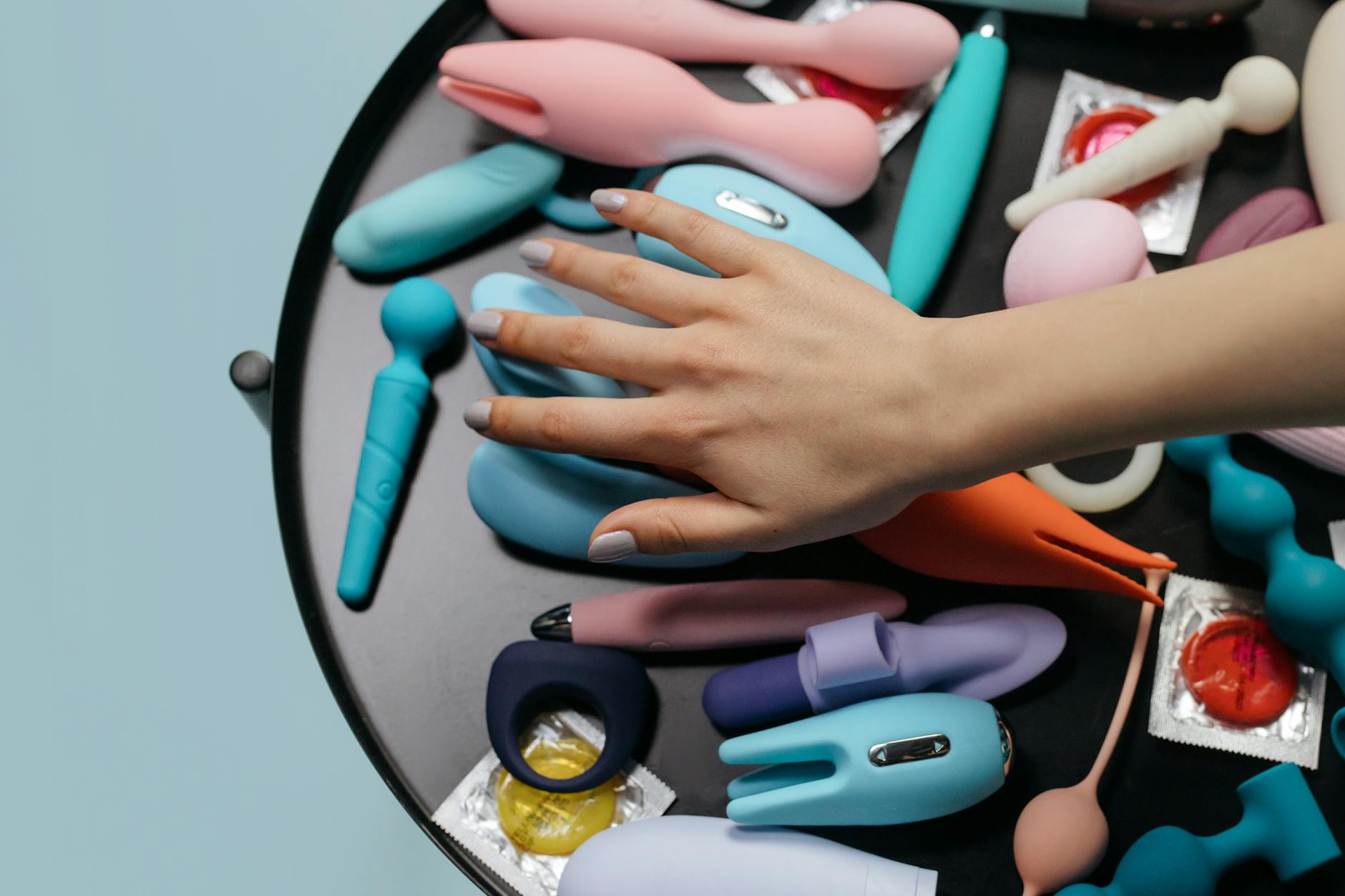
Photo by cottonbro studio on Pexels
Common beginner mistakes to skip
Trying to reach orgasm on your first try. Orgasm might happen. It might not. Your first session is about curiosity, not performance. If you're tensing up trying to "make" it happen, you're working against pleasure, not toward it.
Going straight to maximum intensity. This is the fastest way to numb yourself. Start low. Increase gradually across multiple sessions.
Using silicone-based lubricant with a silicone toy. Silicone lube breaks down silicone materials over time. Stick to water-based.
Forcing the seal or holding it in the same position the entire time. If you're using a suction-style lemon vibrator, the seal will naturally form and release. Let it. Your clitoris might also prefer slightly different angles as you go. Small adjustments are fine.
Not reading your body's boundaries. If something hurts (not "intense and weird," but actual pain), stop. If you feel overstimulated, stop and take a break. Pleasure should feel good, not like a chore.
After your first use: maintenance and reality-checking
Once you're done, turn off the device, clean it according to the manual (usually warm water and mild soap), and dry it completely before storing. This keeps it hygienic and extends the lifespan.
Take a moment to notice how you feel. Not whether it was perfect, but how your body responds. Some people feel deeply relaxed. Others feel energized. Both are completely normal outcomes.
If your first session felt strange or just okay, that's not a signal to give up. Most people need two or three experiences to feel genuinely comfortable with a new toy. Your body is learning something new. Learning takes practice.
When to reach out if something feels off
If you experience pain, irritation, or unusual discomfort, stop using the device and reach out to your healthcare provider. If you're experiencing numbness or tingling that doesn't resolve within a few hours, that's also worth checking.
If you're using a lemon clitoral vibrator with a partner and something feels wrong emotionally (awkwardness, pressure, resentment), that's a conversation to have, not a toy problem. The device isn't the issue. Communication is.
Otherwise, trust your body. It knows what feels good.
FAQ: What beginners actually ask
How long should my first session be?
Start with 10 to 20 minutes. Your clitoris and your nervous system need time to adjust. Longer sessions can happen once you're comfortable, but short, consistent sessions are better than marathon attempts early on.
Can I use a lemon vibrator if I've never had an orgasm?
Absolutely. Some people find that a clitoral vibrator helps them understand their own body and reach orgasm for the first time. There's zero shame in that. You're exploring, not failing.
Should I use lubricant every time?
Every single time if you're using it on your external clitoris. Even if you're very aroused naturally, lube reduces friction and makes the sensation clearer. Think of it as part of the experience, not an emergency fix.
What if I feel self-conscious using it?
That feeling usually passes after the first use or two. Your pleasure matters. The device is a tool for your body, not a judgment on you. If the self-consciousness lingers, it might be worth reflecting on where that comes from, but there's nothing wrong with taking time.
Can I use a lemon vibrator with a partner?
Yes. Many couples use clitoral vibrators together during partnered sex. It often enhances penetrative sex or oral sex. Communication before, during, and after is key. Talk about where you want it, how it should feel, and whether you want it every time or sometimes.
How often can I use a lemon vibrator?
Daily is fine. Multiple times a day is fine. Your clitoris won't get tired or stop responding. Some people find that consistent use actually improves their ability to reach orgasm because their nervous system learns the sensation.
You don't need permission, but here it is anyway
Your pleasure deserves time, attention, and the right tools. Learning to use a lemon clitoral vibrator is learning to know your own body better. That's never wasted effort. Start slow, be curious, and trust what feels good. If you want to dig deeper into the world of clitoral vibrators, explore our complete guide to lemon vibrators for more advanced techniques and product insights.
Your first time with any new toy is an exploration, not an exam. You're allowed to be a beginner. You're allowed to take your time. You're absolutely allowed to enjoy yourself.
References
- Kingsberg, S. A., & Woodard, T. (2015). Female sexual dysfunction: focus on low desire. Obstetrics and Gynecology, 125(2), 477-486.
- Laan, E., & Janssen, P. L. (2007). Pathophysiology of female sexual dysfunction. International Journal of Impotence Research, 19(5), 424-431.
- Meston, C. M., & Frohlich, P. F. (2000). The neurobiology of sexual function. Archives of General Psychiatry, 57(11), 1012-1030.