Let's talk about what happens when desire gets quiet
Most couples don't break up because they stop loving each other. They drift because the physical connection becomes routine. Sex happens less often, or when it does, it follows the same rhythm. The novelty drains. Neither partner is doing anything wrong. This is just what long-term intimacy looks like without intentional change.
Here's the thing: introducing a lemon clitoral vibrator isn't about fixing what's broken. It's about disrupting the pattern that's become invisible.
Why couples plateau (and why it's not about attraction)
Research on long-term couples shows something interesting. After the initial infatuation phase fades (usually two to three years), desire tends to drop for both partners. This isn't because you're less attracted to each other. It's because your nervous system has adapted. Your brain no longer registers your partner's touch as novel, so the arousal response flattens.
Add to that: life. Kids, jobs, aging parents, mortgages. By the time you're both available and wanting to connect, you're tired. The mental load of daily life competes with pleasure for brain space. Women especially report that they can't access arousal because they're still in "operator mode" from the day.
A lemon vibrator changes this equation. It reintroduces sensation that your body hasn't adapted to yet. The suction-based stimulation feels fundamentally different from penetration or manual touch, which jolts the nervous system awake.
Why lemon vibrators specifically work for couples
Unlike traditional vibrators, which rely on pure vibration, lemon sexual toys use air-suction technology. This creates a pulsing sensation that mimics the physics of oral sex without the endurance or technique stress that sometimes makes couples self-conscious.
For long-term partners, this matters. If one partner has always struggled with orgasm during partnered sex, a lemon clitoral vibrator can make it achievable, which removes performance anxiety from both sides. The person receiving gets reliable pleasure. The partner giving learns what works, which builds genuine confidence instead of performance theater.
Secondly, lemon vibrators are quieter and less intimidating than larger wand toys. This sounds trivial but it's not. The mental barrier to bringing a toy into a couple's bedroom is real. A sleek, minimalist lemon sucker like the Lem vibrator feels less clinical than a heavy wand. It's easier to introduce without that "okay we're getting serious" energy that sometimes kills the mood.
The conversation: how to bring it up without awkwardness
Honestly, most couples overthink this part. The moment of introduction often feels more fraught than it needs to be.
Start outside the bedroom. Over coffee or during a walk, bring it up plainly. Not as a symptom that something's wrong, but as something you want to try. The language matters: "I've been thinking about adding something to our sex life that might feel new for both of us" is different from "I want us to try a vibrator because things have gotten boring."
Frame it around novelty, not deficit. "I read that lemon clitoral vibrators change how couples experience pleasure together, and I'm curious" beats "I think we need help."
If your partner hesitates, ask why. Sometimes it's insecurity ("Does this mean I'm not enough?"). Sometimes it's unfamiliarity. Listen without defending. A simple answer like "It's not about you. It's about us exploring something together" defuses most resistance. Many men are relieved when they realize it's actually a tool that can make their partner's orgasm easier, which means less pressure on them.
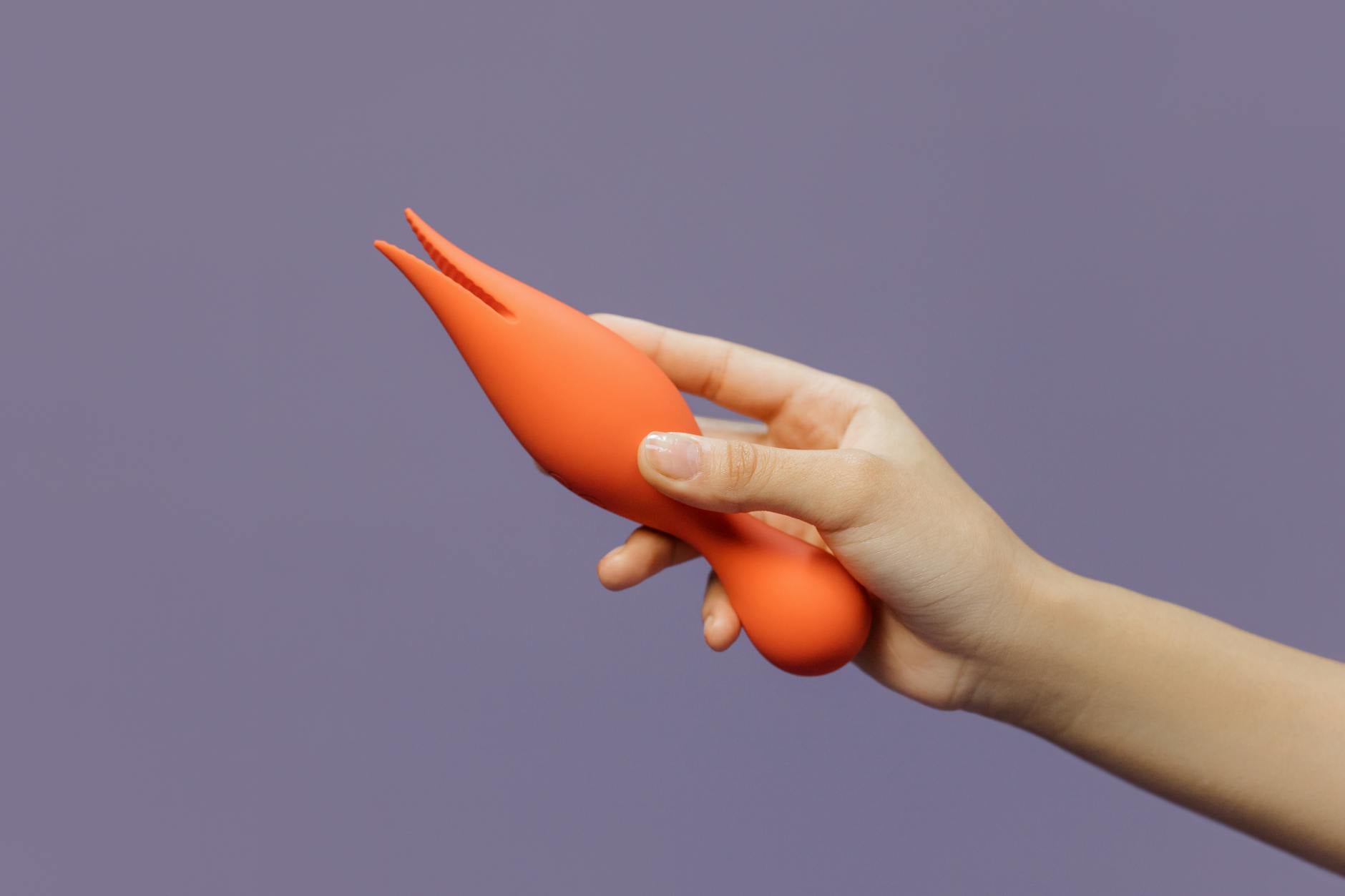
Photo by cottonbro studio on Pexels
The first time: how to actually use it together
Buy the lemon vibrator a few days before you plan to use it. Let it sit there. No pressure to use it immediately. This removes the ceremonial weight.
When you're both in the mood, one person should be in control of it initially. Usually this is the receiving partner, because they know their own sensitivity and pacing. Start with low settings. The suction-based technology means you're working with physics, not just vibration, so you don't need maximum intensity to feel the effect.
If you're partners, your role is presence and communication. Touch somewhere else. Watch. Pay attention to what feels good for them. This matters because you're learning their body's response in a new context. You're also not performing. You're witnessing. This subtle shift builds genuine intimacy.
Many couples report that the experience of using a lemon clitoral vibrator together actually increases their sense of connection because there's less performance pressure and more actual pleasure happening. When your partner is genuinely enjoying themselves, it changes the dynamic.
The pattern after the first time
Some couples use a lemon vibrator every time. Others use it occasionally, or only in certain situations (when she's having trouble reaching orgasm, or when they want sex to feel less routine). There's no "correct" frequency.
What I've noticed in my practice is that introducing one well tends to open a conversation about pleasure more broadly. Suddenly couples are talking about what they actually want, not just what they've been doing. That conversation matters more than the toy itself.
If you're using the Lem vibrator or another lemon sucker with a partner, keep it clean (warm water and mild soap after use, or a toy cleaner). Keep it accessible, not hidden away. The less shame around it, the more naturally it integrates into your intimate life.
When to bring it up again if the first time didn't stick
Maybe your partner wasn't into it. Maybe the timing felt off. Maybe the toy itself wasn't comfortable. This is normal. Not every tool works for every person.
Don't let one awkward experience close the door on the conversation. In a few months, when things have felt a bit routine again, bring it up differently. "That lemon vibrator thing we tried. I've been thinking about it differently now." Sometimes people need time to process. Sometimes they need you to try a different approach or a different product.
What matters is that you keep showing up to the conversation about pleasure. That's the real change. Long-term couples who maintain desire do so because they keep choosing to pay attention to what feels good, and they're willing to evolve how they do that.
Common worries (and what's actually true)
Will using a toy make my partner think I'm not satisfied with them? No. If you frame it as exploration, not correction, most people understand. And honestly, a partner who loves you wants you to experience pleasure. A good partner isn't threatened by a tool that makes that easier.
Will it become something we need every time? Unlikely. Most couples find a rhythm where they use lemon vibrators sometimes, not always. It becomes one option, not the only option.
Will it feel clinical or kill the mood? Not if you choose a well-designed product and bring it in the right moment. A sleek lemon clitoral vibrator designed for couples feels different than a huge novelty toy ordered from somewhere sketchy.
What if one of us has a lower sex drive than the other? This is where a lemon vibrator can actually help. If one partner wants sex more frequently, using a vibrator together can satisfy that need in a way that feels collaborative. It's not a substitute for addressing deeper relationship issues, but it can reduce resentment around frequency.
When to involve a professional
If you've had the conversation and one partner is firmly against it, don't push. That's a boundary. If a vibrator seems like the solution to a deeper intimacy problem (you're not talking, you're not touching, you resent each other), the toy won't fix that. A relationship coach or therapist is the actual answer there.
If one partner experiences pain during sex, or if desire has completely vanished, those deserve attention too. A toy is an enhancement, not a treatment for underlying issues.
But if you're just two people who love each other and want to shake things up after years together, a lemon vibrator is exactly the kind of simple, sensible intervention that works. You're not trying to recreate early passion. You're just trying to make pleasure feel possible again.
FAQ
What's the difference between a lemon vibrator and a regular vibrator for couples?
Lemon sexual toys use suction technology rather than pure vibration. This creates a sensation that mimics oral sex and feels distinctly different from what your body has adapted to in long-term partnered sex. They're also typically smaller and quieter, which makes them less intimidating to introduce. A lemon clitoral vibrator feels less clinical in the bedroom context than a large wand toy.
How do I know if my partner will be open to using a lemon vibrator together?
You ask. Have the conversation outside the bedroom, when you're both relaxed. Listen without judgment to any hesitation. Many partners worry they're not enough, or that introducing a toy means the relationship is broken. If you frame it as exploration and novelty, not a fix, most people are curious. If your partner says no, respect that boundary. You can always revisit the conversation later.
Can we use a lemon clitoral vibrator if we have different sex drives?
Yes, actually. If one partner wants sex more frequently than the other, using a lemon vibrator together can meet that need in a collaborative way that doesn't require one person to perform. It's not a substitute for addressing deeper resentment around frequency, but it can reduce tension. For couples where one person struggles with orgasm, it increases the likelihood of mutual satisfaction, which often boosts frequency naturally.
Is it normal to need a toy to enjoy sex after being together for years?
Completely. Long-term couples experience a real neurological shift. Your brain adapts to familiar touch, so novelty is one of the few reliable ways to reactivate the arousal response. It's not a sign that something's wrong with your relationship. It's actually a sign that your nervous system is doing exactly what it's supposed to do. Introducing a lemon sucker or lemon clitoral vibrator is a practical solution to a normal problem.
How often should we use a lemon vibrator together?
There's no prescription. Some couples incorporate it into most of their sex life. Others use it occasionally, or in specific situations where one person is having trouble reaching orgasm. What matters is that it's a choice, not a requirement. Over time, you'll find a rhythm that works. Many couples report that after a few months, they use it less frequently because their overall intimate connection has improved.
What if I buy a lemon vibrator and one of us doesn't like it?
Try it a few times before deciding. Sensation can feel weird at first. If it's genuinely not working for either of you, that's okay. Return it. The act of trying something new together often matters more than the specific tool. If the vibrator aspect isn't right, you might explore other options, or you might realize you just needed permission to have a more intentional conversation about what you both actually want.
The truth about long-term pleasure
Desire doesn't have to die in long-term relationships. It just needs attention. A lemon vibrator isn't magic. It's a tool that reintroduces sensation your body hasn't adapted to, which gives you both permission to slow down and pay attention to pleasure together. That combination is actually powerful.
If you're looking to revitalize intimacy with your partner, the conversation matters more than the product. But having a really good product makes the conversation easier to start. That's what lemon clitoral vibrators do for couples who are ready to explore together.
If you'd like to discuss your specific situation, let's talk.