Let's talk about the thing nobody tells you before you start hormonal birth control
You'll read about headaches, weight changes, mood shifts. What you won't hear from most doctors is that your orgasms might get quieter. Arousal might take longer to build. Touch that used to feel electric might feel muffled, like you're experiencing pleasure through a thick pane of glass.
This is real. It happens to a lot of people. And it's completely fixable.
What hormonal birth control actually does to your sensation
Hormonal contraceptives (the pill, patch, shot, implant, ring) work by suppressing your natural hormone fluctuations. They keep estrogen and progesterone relatively steady to prevent ovulation. But here's the catch: steady hormones mean you lose the natural peaks and valleys that fuel arousal.
Estrogen plays a huge role in vaginal lubrication, clitoral sensitivity, and blood flow to the pelvic region. When estrogen stays artificially flat, all three of those things can decrease. Some people report orgasms feel less intense. Others say it takes twice as long to get there. A few lose the ability to orgasm entirely on certain formulations.
The good news: this usually levels out after 3-6 months, and if it doesn't, switching formulations often helps. The better news: even while your body adjusts, there are tools that work better than waiting.
Why sensation dulls on hormonal birth control
Two mechanisms are at work.
First, the vascular piece. Arousal relies on blood rushing to genital tissue. Your clitoris has thousands of nerve endings, and when blood flows there, those nerves light up. Estrogen helps that happen smoothly. Lower estrogen means slower blood flow, which means arousal builds gradually instead of quickly.
Second, the neural piece. Your brain's arousal pathways are partly estrogen-dependent. When you're on hormonal contraception, your brain's perception of pleasure can feel dampened, almost like you're hearing your favorite song through earplugs. You can still enjoy it, but something's missing.
This doesn't mean your clitoris is broken. The nerve endings are still there. You're just working with less hormonal fuel.
The role of lemon vibrators in restoring sensation
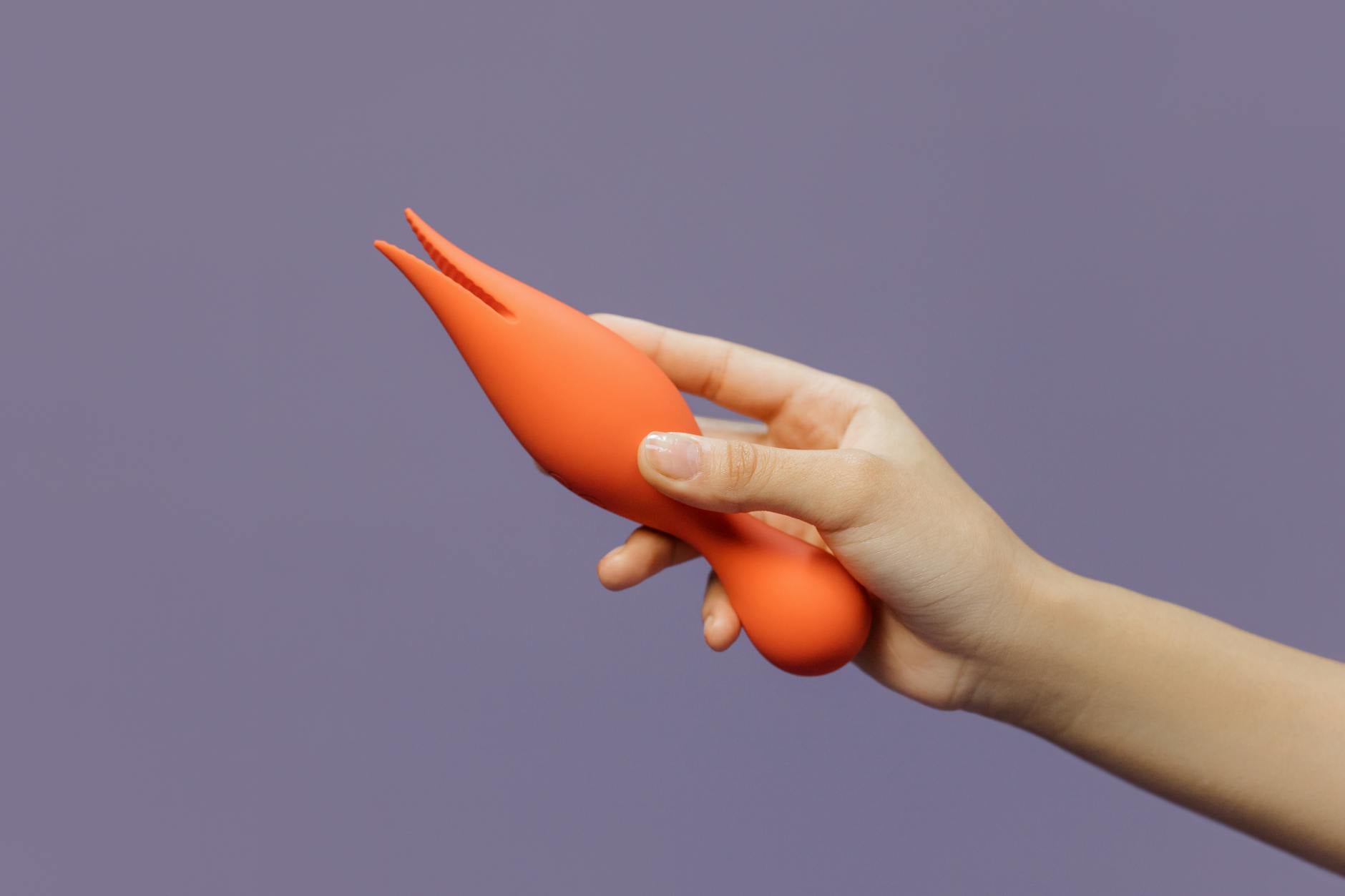
This is where lemon clitoral vibrators like the Lem enter the conversation. Air-pulse technology is different from traditional vibration. Instead of buzzing, it uses rhythmic suction and release to stimulate the clitoral complex. That targeted pressure is more effective than broad vibration when hormonal factors have dulled sensation.
Here's why that matters on hormonal birth control: because sensation is already muted, you need a more direct signal. Traditional vibrators rely on broad stimulation across the entire vulva. Air-pulse devices concentrate stimulation on the clitoral body itself, meaning they work harder with less effort from your body. It's the difference between someone tapping your shoulder and tapping your collarbone directly. Same hand, completely different sensation.
Many people find that lemon sexual toys bypass the dulling effect of hormonal birth control in a way that other tools don't. You're not fighting against your hormones. You're just being more strategic about where and how you're stimulating.
How to use a lemon vibrator when sensation feels muted
Start with a realistic mindset: you might not feel the same intensity you did before birth control. That's not failure. It's information. Here's how to work with it.
Set aside longer foreplay time. If arousal normally took 10 minutes, budget 20. Your body isn't broken. Hormonal shifts just mean you need more time for blood to pool and sensation to build. That's it.
Begin on the lowest setting of your Lem. Lemon clitoral vibrators have multiple patterns and intensity levels. Start at pattern 1, level 1. Your goal isn't immediate intensity. It's consistent, gentle stimulation that your body can register even when sensation is dulled.
Use generous lubrication. Hormonal birth control can reduce natural lubrication, and reduced lubrication plus reduced sensation is a one-two punch. Water-based lube isn't just comfort. It's part of the tool. Reapply as you go.
Angle for the clitoral glans and body. Most people find the most sensitivity in the visible clitoris itself rather than the broader vulva. With a lem vibrator, you can position it directly over the glans. You're not hoping to find the right spot. You're targeting it.
Breathwork matters more than you'd think. When sensation feels distant, slow breathing keeps you anchored. Deep inhales and exhales help blood flow and keep you mentally engaged. This isn't spiritual. It's physical.
When to consider switching formulations
If you've been on the same hormonal birth control for 6-12 months and sensation hasn't improved, it might be worth talking to your doctor about switching. Some formulations have lower hormone doses or different hormone combinations that affect sensation less.
You're not overreacting by mentioning this. Sexual function is health. Any good doctor takes that seriously. Bring it up plainly: "My arousal and orgasm have changed significantly since starting this. Can we discuss other options?"
Common switches that help include moving from a standard-dose pill to a lower-dose version, or trying a different progestin. You might also explore non-hormonal options like IUDs, which eliminate the daily hormonal suppression entirely.
The psychological layer nobody talks about
Here's something I see constantly in my practice: people blame themselves when sensation changes on birth control. They think something's wrong with them or their relationship. It's neither.
But that self-blame creates a second layer of numbness. Anxiety about your body's response makes the response even quieter. It becomes a feedback loop: sensation dulls, you worry about that, tension increases, sensation dulls further.
Breaking that cycle means separating the physical from the emotional. Yes, your hormones shifted. No, that's not a referendum on your sexuality or your relationship. It's a variable you're learning to work around, the same way you'd adjust to any other body change.
If you have a partner, this is also a moment to communicate clearly. "My sensation has changed since starting birth control" is not "I'm not attracted to you anymore." It's useful information that lets both of you adapt together.
What you can control while on birth control
You control how often you explore your body. You control your lube choices. You control the tools you use. You control how much grace you extend yourself during the adjustment period.
What you don't control is the hormonal environment, at least not immediately. That's okay. You're still worthy of pleasure. You're still capable of orgasm. You're just working with a different instrument, and learning a new instrument always takes patience.
Most people who stick with lemon clitoral vibrators during hormonal birth control adjustments report that sensation either returns after a few months or becomes consistently accessible with the right tool. You don't have to wait for your hormones to cooperate. You can take action now.
FAQ: Common questions about sensation loss on hormonal birth control
Does sensation always come back after starting hormonal birth control?
For most people, yes. The body often adjusts after 3-6 months, and sensation normalizes. But some people stay on a formulation that doesn't work and don't realize there are other options. If sensation hasn't improved after 6 months, that's the time to talk to your doctor about switching rather than waiting indefinitely.
Can I use a traditional vibrator if I'm on birth control and sensation feels numb?
You can, but many people find air-pulse technology more effective for muted sensation. Because traditional vibration is broad and generalized, it can feel even more distant when hormones have already dulled response. Lemon sexual toys use targeted suction instead, which creates a clearer signal your body can register.
Does switching birth control methods completely restore sensation?
Often, yes, but not always immediately. Moving from hormonal to non-hormonal contraception (like a copper IUD) usually results in noticeable sensation changes within a few cycles as your natural hormone fluctuations return. If you switch between different hormonal formulations, you might notice changes within 2-4 weeks, though the full adjustment takes longer.
Is it normal to need toys to orgasm when I didn't before starting birth control?
Completely normal. It's not a permanent need. It's a temporary adaptation while your body adjusts to the hormonal shift. Many people find that as sensation stabilizes, they have options again. You might use a lemon vibrator sometimes and not other times, the way you did before birth control.
Should I tell my partner about sensation changes from birth control?
Yes. Not because you're confessing something, but because your partner is part of the experience. Knowing that sensation has changed due to hormones means they don't take it personally. It also opens space for you both to experiment with tools and techniques together. Transparency usually strengthens connection here, not weakens it.
Are there supplements or lifestyle changes that help restore sensation on hormonal birth control?
Movement helps. Aerobic activity increases pelvic blood flow, which supports arousal. Stress reduction helps because stress suppresses blood flow too. But no supplement will override the hormonal suppression of birth control. The most direct fix is either switching formulations or using targeted tools like lemon clitoral vibrators while your body adjusts.