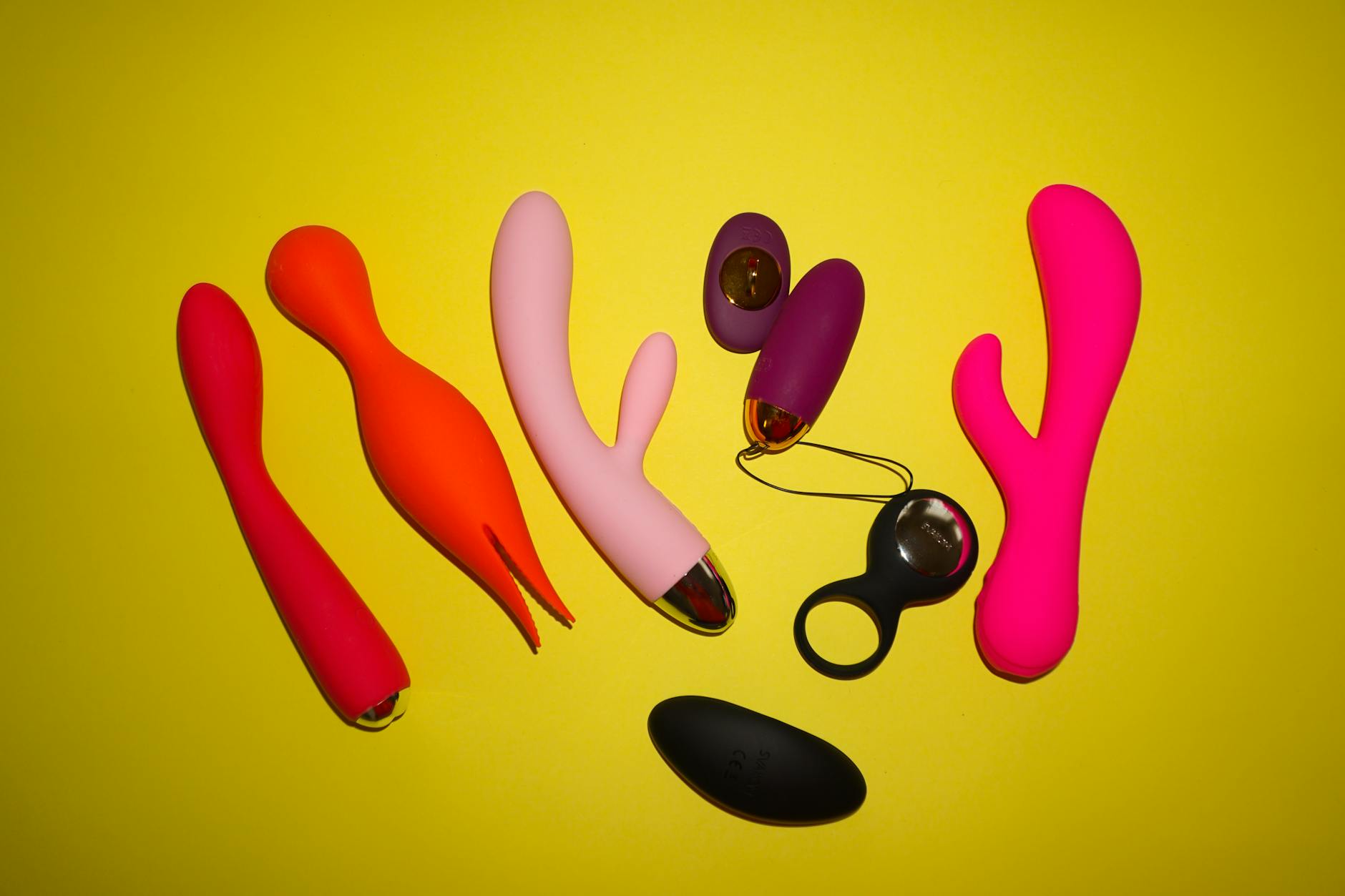
The thing nobody talks about: your body might feel like it belongs to someone else
Disconnection isn't always about low libido or past trauma (though it can be tied to both). Sometimes it's dissociation. Sometimes it's depersonalization. Sometimes you're just so far in your own head that your body feels like a foreign thing you're piloting from a distance. Touch feels numb. Sensation registers as theoretical rather than real. You know orgasm is supposed to feel good, but when you try, it's like watching someone else have the experience through thick glass.
If that sounds familiar, you're not broken. But you do need a different approach to pleasure.
That's where lemon vibrators come in. They're not going to fix dissociation on their own (therapy, grounding work, and sometimes medication do that). But they can be a gateway tool for reconnecting your nervous system to sensation. Here's how.
Why disconnection changes what your body needs from a vibrator
When you're dissociated or numb, traditional vibration often feels like white noise. Your nerves aren't registering the stimulation as pleasurable information. They're registering it as pressure or vibration that exists somewhere in the distance, not in your body.
Lemon clitoral vibrators work differently than bullet vibrators or wand toys. The suction-based pattern creates a rhythmic pulling sensation rather than constant buzzing. That rhythm mimics the way sensation travels through your nervous system during grounding exercises. Your brain recognizes it as alive in a way that flat vibration sometimes doesn't.
Second, the intensity range matters. You need to start somewhere so subtle that your nervous system can't ignore it. Lower patterns on lemon toys (patterns 1-3) offer sensation without overwhelming. Many people in dissociative states describe overstimulation as pushing them further away from their body. Gentler tools allow you to dial in the sweet spot where you're present without fleeing.
Building a reconnection practice, not just a pleasure session
If you're using a lemon vibrator to move toward your body rather than away from it, the context changes everything.
Start with a grounding ritual. Before you touch yourself, spend 3-5 minutes on something tactile and non-sexual. Cold water on your face. A weighted blanket. Running your hands over different textures. Name what you feel: "My hands are cold. The blanket is heavy. This is in my body right now." You're reminding your nervous system that sensation exists.
Then introduce the vibrator at the lowest setting. Don't chase pleasure. Chase presence. Ask yourself: Can I feel this? What does this feel like in this moment? If you feel nothing, lower the setting further or take a break. The goal is micro-sensations you can locate in your body, not orgasm.
Many people find that 5-10 minutes of this kind of reconnection practice, done regularly, starts to rewire the dissociation. You're not training your clitoris. You're training your brain to stay in your body while sensation happens.
The rhythm piece (why patterns matter more than intensity)
One thing therapists who specialize in dissociation know: rhythm is grounding. It's why music helps. Why rocking helps. Why bilateral stimulation works in EMDR.
Lemon clitoral vibrators, because they use pulsing suction rather than constant vibration, give you access to different rhythmic patterns. Lower patterns (1-3) tend to be slower and more penetrating. Higher patterns become faster and more intense. If you're disconnected, you might find that a specific rhythm pattern (not intensity) is what brings you back into your body.
Experiment. Try pattern 2 for a minute and notice where you feel it. Try pattern 4 and check in again. One might feel present and accessible. Another might feel distant. The one that feels real to you is the one that's working.
The partner conversation (if there is one)
If you have a partner, they need to understand that reconnection sessions aren't foreplay. They're not a prelude to sex. They're a sensory practice, and the goal is your presence, not their pleasure.
A good partner conversation sounds like: "I'm working on reconnecting with my body. I'm going to use my lemon vibrator. I might orgasm. I might not. That's fine either way. If you're interested in being near me while I do this, I'd like you to sit quietly and maybe hold my hand. What I'm doing is for me right now." Most partners who love you will get that. Some will want to help. The best way they can help is by being present without expectation.
What to do if you hit a wall
Disconnection isn't linear. Some days you'll feel present in your body. Other days a lemon vibrator won't touch the numbness. That's normal, especially if dissociation is tied to trauma, anxiety, or depression.
On those days, your job isn't to force it. Put the toy down. Go back to grounding rituals. Maybe that's ice water. Maybe that's naming five things you can see, four you can touch, three you can hear, two you can smell, one you can taste. That's the real work. The vibrator is just the tool you use when your nervous system is ready.
If disconnection is severe and persistent, talk to a therapist, especially one trained in trauma, somatic therapy, or dissociation. They can help you understand what's driving the disconnect. A lemon vibrator is not a substitute for that work. But it can be a useful companion to it.
Patience with yourself (the longer version)
Rebodiment is slow. You might spend weeks at the lowest intensity before you feel ready to move up. You might have sessions where you feel flooded and need to stop halfway through. You might use a lemon vibrator for three months before an orgasm feels real instead of performative.
That's all okay. The point is consistency and gentleness, not speed. Every time you use your vibrator intentionally to stay present rather than to check a box, you're building the neural pathway back to your body. It works. It just takes time.
And when reconnection starts to happen? When sensation suddenly feels like it's happening to you instead of near you? When an orgasm makes you feel alive instead of numb? That's the moment you'll understand why so many people rely on lemon clitoral vibrators not as toys but as tools for coming home to themselves.
FAQ: Reconnection and Lemon Vibrators
How long does it typically take to feel reconnected to your body again?
There's no standard timeline. For some people, consistent sensory practice over 4-6 weeks shifts things noticeably. For others, it takes 3-4 months of regular work. Dissociation often has deep roots (trauma, anxiety, depression, neurological patterns), so rebuilding embodiment is slower than building pleasure. The win isn't about speed. It's about noticing small moments of presence. One day you'll realize you felt the vibration in your clitoris instead of as abstract pressure. That's progress.
Can I use a lemon vibrator if I'm on antidepressants or anti-anxiety medication?
Yes, absolutely. Many people find that medication helps create enough stability in their nervous system that reconnection work becomes possible. If medication is numbing your sensation, that's a conversation with your prescriber, not a reason to avoid using a vibrator. Some people find that how lemon vibrators work for better sensation after antidepressants explains the nuance better.
What if I feel nothing even on the lowest setting?
That means dissociation is pretty active right now. Lower settings usually aren't the limiting factor. Your nervous system is offline. Go back to non-sexual grounding first. Spend a week on ice water, weighted blankets, cold showers, and breath work. Once you can feel those things consistently, reintroduce the vibrator. You might also benefit from understanding how lemon vibrators work when sensation feels disconnected after trauma.
Is this the same as how lemon vibrators work when depression numbs sensation?
They overlap but aren't identical. Depression numbs motivation and pleasure-response. Dissociation numbs presence and embodiment. Both use similar tools (gentle, rhythmic stimulation), but dissociation often requires more foundational grounding work before pleasure reconnection happens. If you're unsure which one applies to you, start with grounding practice and let the sensations guide you.
Can a partner help speed up reconnection?
A partner can create safety and presence, which helps. But they can't do the embodiment work for you. The most helpful thing a partner can offer is consistent, low-pressure companionship. Not commentary, not guidance, not performance. Just "I'm here." If your partner relationship is healthy, that alone can be grounding. If it's chaotic or unsafe, reconnection work is harder. That's not a reason to avoid it. It's just reality to work with.
Should I try meditation or breathwork before using my lemon vibrator?
Yes. A few minutes of grounded breathing (feeling your feet on the floor, naming what you see, syncing your breath to a count) activates your parasympathetic nervous system. That's the state where reconnection becomes possible. Pairing breathwork with your vibrator amplifies both. You might breathe in for four counts, exhale for six, while using your lemon vibrator at a very low pattern. That combination of rhythm signals your brain that it's safe to be present.
The path back is sensory, not heroic
Your body didn't abandon you. Your nervous system learned to leave for protection. Using a lemon vibrator intentionally, as a tool for presence rather than a shortcut to orgasm, is one way to tell your nervous system that it's safe to come back home. That practice, repeated with patience and without pressure, works. It just takes time.