Let's talk about what happens when hormones tank your desire
Your libido didn't disappear. It got hijacked. Hormonal shifts don't erase attraction or your body's capacity for pleasure. What they do is lower the baseline of desire, make arousal slower to build, and sometimes make orgasm feel more distant than it used to. That's different from broken, and it matters.
When estrogen, progesterone, or testosterone shifts, your brain literally changes how it responds to stimulation. The neural pathways for arousal are still there. They're just operating on a lower voltage.
How hormones actually affect desire and arousal
Here's the physiology without the jargon. Hormones control dopamine and oxytocin, the chemicals that make you want sex and feel good during it. When hormonal birth control suppresses your natural cycle, when perimenopause swings your levels wildly, or when other hormonal changes happen, those chemical messengers get dampened. Your brain still knows how to feel pleasure. It's just getting less signal.
The second thing that happens is tissue changes. Lower estrogen means thinner vaginal tissue and less natural lubrication. That can make stimulation feel duller because there's less elasticity and blood flow. Your clitoris is still full of nerve endings. But the tissue around it changes, which can make direct pressure feel either too intense or oddly numb.
Third, hormonal changes often come with fatigue, mood shifts, or brain fog. Desire lives partly in your brain, and when your brain is running on fumes, sex drops way down the priority list. That's not laziness. That's neurobiology.
Why lemon clitoral vibrators work differently when your hormones are off
A traditional vibrator relies on you having baseline arousal already happening. It needs you to be somewhat turned on before it can build from there. That works fine when your hormones are stable. When they're not, you're often starting from zero, and a regular vibrator can feel pointless.
Lemon sucker vibrators like the Lem work on a different principle. Instead of direct vibration, they use gentle suction and pulsing. That means they can create pleasure without needing you to already be aroused. You're not trying to build arousal from a low baseline. You're jumpstarting it.
For people with lower libido from hormonal shifts, this changes everything. Because the suction pattern can work on desensitized tissue. It doesn't need the blood flow and swelling that usually primes the clitoris. It creates that stimulation mechanically, which means your body doesn't have to do as much work to feel something.
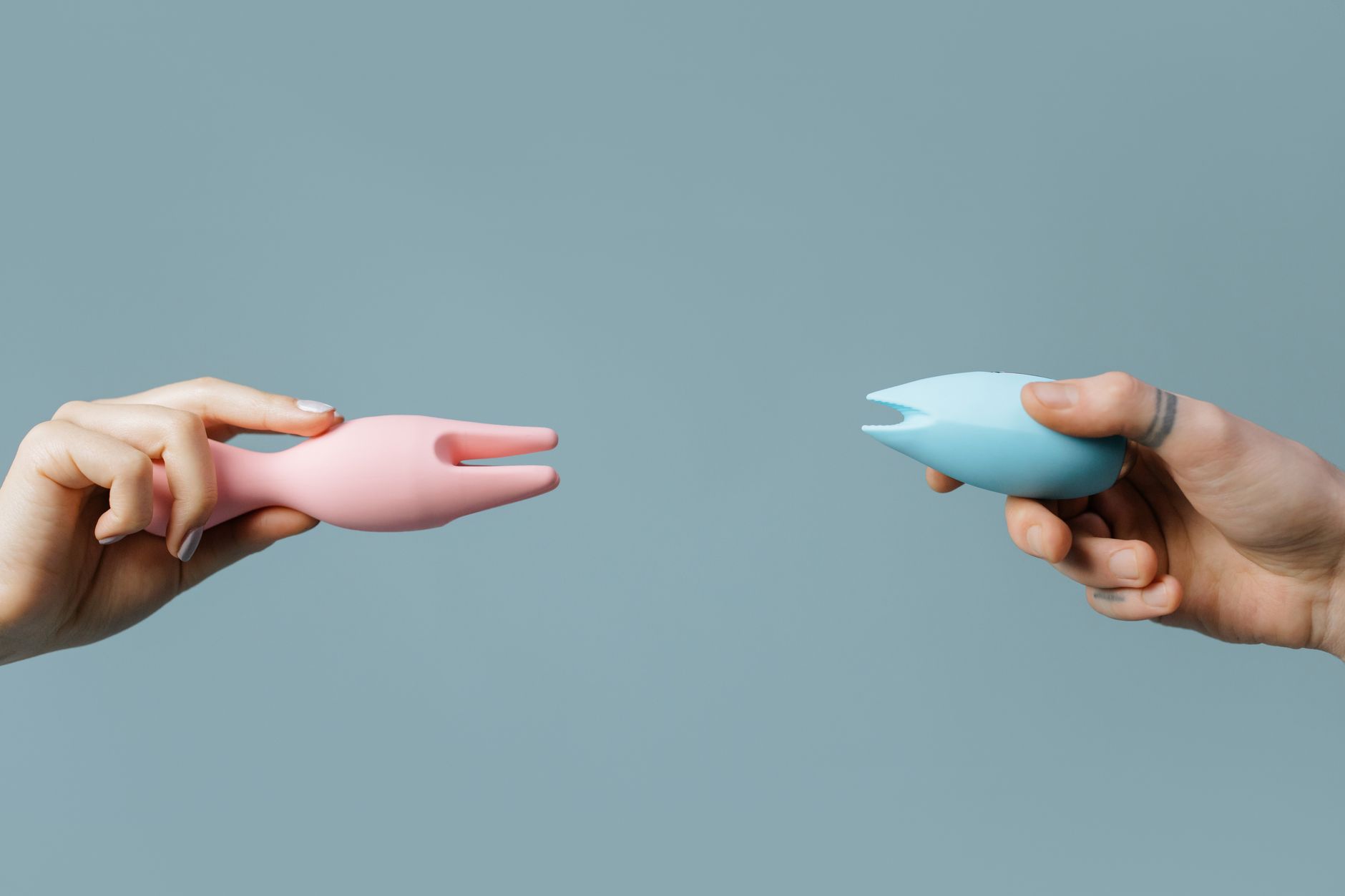
Photo by cottonbro studio on Pexels
The practical setup when desire is low
Four changes to how you approach lemon vibrators when hormones have tanked your baseline libido.
Start without expectation. Not "I'm going to orgasm." Just "I'm going to see what this feels like today." Lower libido is partly neurological, partly chemical. If you add pressure to perform, you add cortisol, which makes arousal even harder. Permission to just explore, without a goal, actually works.
Use lubrication even if you think you don't need it. Hormonal changes thin tissue. Even if you feel wet, additional lube makes the suction pattern work more smoothly and prevents irritation. Water-based lube (like what pairs with silicone toys) is your baseline. Add more than you think you need.
Start at the lowest setting. If you're using a Lem vibrator, begin on pattern 1. Let your body register what's happening before you add intensity. Desensitized tissue sometimes responds better to gentle, sustained stimulation than to ramped-up intensity. You can always increase. You can't unsqueeze sensitivity once you've shocked your nerves.
Build in warm-up time that has nothing to do with the vibrator. Hormonal low libido often means your body needs longer to transition into pleasure mode. Fifteen minutes of touch, breathing, or just being still with your partner or alone helps your nervous system shift from alert to receptive. The vibrator is a tool, not a shortcut past that transition.
How to rebuild desire while using lemon vibrators
Using a lemon clitoral vibrator when your libido is low isn't just about getting off. It's about reminding your brain and body that pleasure is available. Hormonal changes make you feel disconnected from sex. Regular, low-pressure exploration with something like the Lem can rebuild that connection.
Make it a ritual without the romance. Three times a week, fifteen minutes, same time of day if possible. Your brain needs consistency to rebuild desire pathways. You're not chasing orgasm. You're re-establishing the baseline that hormones erased.
Notice what changes. After two to three weeks of regular use, most people report that pleasure feels less distant. Not because the vibrator is magic, but because repetition rebuilds the neural pathways that hormones suppressed. Dopamine starts flowing again. Arousal becomes faster to build.
When hormonal shifts need more than a vibrator
If your libido crash is severe, sudden, or paired with other symptoms like night sweats, mood swings, or vaginal dryness, talk to your doctor. Some hormonal imbalances (thyroid issues, low iron, PCOS, perimenopause) need clinical support, not just a better vibrator.
If you're on hormonal birth control and your libido bottomed out after starting it, ask your doctor about switching methods. Not every hormonal contraceptive affects desire equally. Some people feel radically different on a different formulation or dose.
If you suspect your issue is relational (desire for your partner specifically dropped, not desire in general), that's a different conversation. A vibrator is a tool for reconnecting with your own body. Couples therapy or a sex therapist can help you figure out if the issue is hormonal, relational, or both.
The mental game when hormones kill your desire
Here's what I see most often: desire crashes, you assume it's permanent, you stop trying, and your brain gets further disconnected from pleasure. The cycle deepens. Using a lemon vibrator regularly is partly about sensation. It's mostly about signaling to yourself that you're worth the fifteen minutes. That pleasure still matters, even if hormones made it harder to access.
When desire is low, you have to choose pleasure. It won't choose you. That's not sexy language, but it's honest. How to find pleasure again after years of low desire goes deeper into rebuilding that relationship with your own pleasure over time.
Hormonal shifts are temporary or manageable, depending on what caused them. Your capacity for pleasure isn't. Using lemon sexual toys is one way to keep that capacity alive while your hormones are in flux.
People also ask
Can a lemon vibrator help rebuild libido that hormones destroyed?
Yes, but it's not magic. What a lemon sucker vibrator does is create sensation and pleasure without needing your body to be in an aroused state first. That breaks the cycle where low libido makes you avoid pleasure, which makes your brain further disconnect from desire. Regular use reestablishes neural pathways that hormonal changes suppressed. The vibrator is the tool. Consistency is what rebuilds.
How long does it take to feel desire again after hormonal changes?
That depends on what caused the hormonal shift. If it's birth control, some people feel changes within two weeks of switching. If it's perimenopause or another long-term hormonal imbalance, rebuilding takes two to four months of regular pleasure practice. The brain learns through repetition. You're retraining your nervous system to recognize and seek pleasure when hormones have dampened those signals.
Should I use a lemon clitoral vibrator differently when my libido is low from hormones?
Yes. Start gentler, use more lubrication, and focus on exploration rather than outcome. Most importantly, use it regularly on a schedule rather than waiting until you feel desire. That schedule helps rebuild the desire itself. You're not using the vibrator because you want sex. You're using it to remind your body that pleasure exists, and to let hormones slowly re-engage those pathways.
Is low libido from hormonal changes permanent?
No. Hormonal changes are either temporary (like during a specific phase of your cycle) or manageable (like with different birth control or hormone therapy). Your underlying capacity for pleasure doesn't change. What changes is the chemical signal telling your brain to seek it. Once hormones stabilize or you find a method that works better, desire usually returns. In the meantime, tools like lemon vibrators help you stay connected to pleasure.
Can I use lemon vibrators if I'm on hormonal birth control?
Completely. In fact, they often work better for people on hormonal birth control because the suction pattern doesn't rely on natural arousal processes. If your birth control is tanking desire, using a lemon vibrator regularly can help you maintain sensation and pleasure while you talk to your doctor about whether a different formulation might work better for you.
What if a lemon vibrator doesn't help my low libido?
Then your low libido might not be primarily about sensation. It could be relational, emotional, or tied to a medical issue that needs attention. Hormonal imbalances like thyroid dysfunction, vitamin deficiencies, or depression can suppress desire at a neurological level that no vibrator can reach. Talk to your doctor about bloodwork and mood assessment. And consider whether couples therapy or sex therapy might help if the issue is relational.