
Why Lemon Vibrators Work Better for Couples Navigating Mismatched Desire
Here's what I hear most often from couples in my office: one partner is ready to have sex three times a week. The other is okay with twice a month. Nobody's wrong. Nobody's broken. But the gap creates a wound that starts to feel like rejection, even when it isn't.
The instinct is to negotiate. "Can we compromise at twice a month?" But that's asking one person to want less and the other to wait longer. Both feel inadequate. This is where most couples get stuck, and it's where a lot of resentment starts to build.
Lemon vibrators change this math entirely. Not by forcing desire, but by creating a third option that doesn't feel like a consolation prize to either person.
Why mismatched desire feels like a relationship problem (even when it's not)
The gap in sexual desire isn't actually about sex. It's about what the gap means to each person.
For the partner wanting more sex, it often feels like evidence that they're not attractive enough, not wanted, not chosen. That their desire is too much. Over time, this becomes a story: "I'm the needy one. I'm the problem." Many of these partners start having fantasies about what it would feel like to be with someone who actually wanted them.
For the partner wanting less sex, it becomes pressure. Constant, invisible pressure. Sex stops feeling good and starts feeling like a chore. They brace themselves. They check their phone. They disappear into their own head. And then they feel guilty because they know this is making their partner sad.
Neither person is actually having bad sex. They're having anxious sex. And anxious sex is the enemy of desire, regardless of how much someone wanted it going in.
What lemon vibrators actually solve
Let me be specific: lemon clitoral vibrators like the Lem work for mismatched couples because they break the binary. With traditional partnered sex, you have two options: do it, or don't. Compromise means one person is always losing.
But a lemon vibrator introduces a third option that's genuinely satisfying to both people.
For the partner with higher desire, using a lemon sexual toy together means touch, attention, and pleasure without the pressure of performing an entire sexual experience. They get to be present, to give, to watch their partner come. That's still intimacy. It's actually more intimate than penetrative sex in a lot of cases, because the pressure is off.
For the partner with lower desire, lemon vibrators reduce friction. The body responds faster. Orgasm comes quicker. There's less time needed to warm up or shift gears mentally. And there's something deeply reassuring about being able to give your partner an experience that feels genuinely good without it taking an hour and leaving you depleted.
This isn't settling. This is redesigning what sex means in your relationship.
The neuroscience behind why this actually works
When you're touch-starved or desire-mismatched, your brain is in threat mode. The amygdala (your alarm system) is activated. You can't relax into pleasure because you're managing the relationship dynamic at the same time.
Clitoral vibrators, particularly suction-style lemon vibrators, bypass a lot of that anxiety because the intensity is consistent and predictable. There's no performance component. Nobody's waiting for the other person to finish. Nobody's watching the clock.
This sounds mechanical, but it's actually the opposite. Because the body can relax, the brain follows. Oxytocin (the bonding hormone) goes up. Cortisol (the stress hormone) goes down. You're actually building more relationship security through this than you would through forced, anxiety-driven sex.
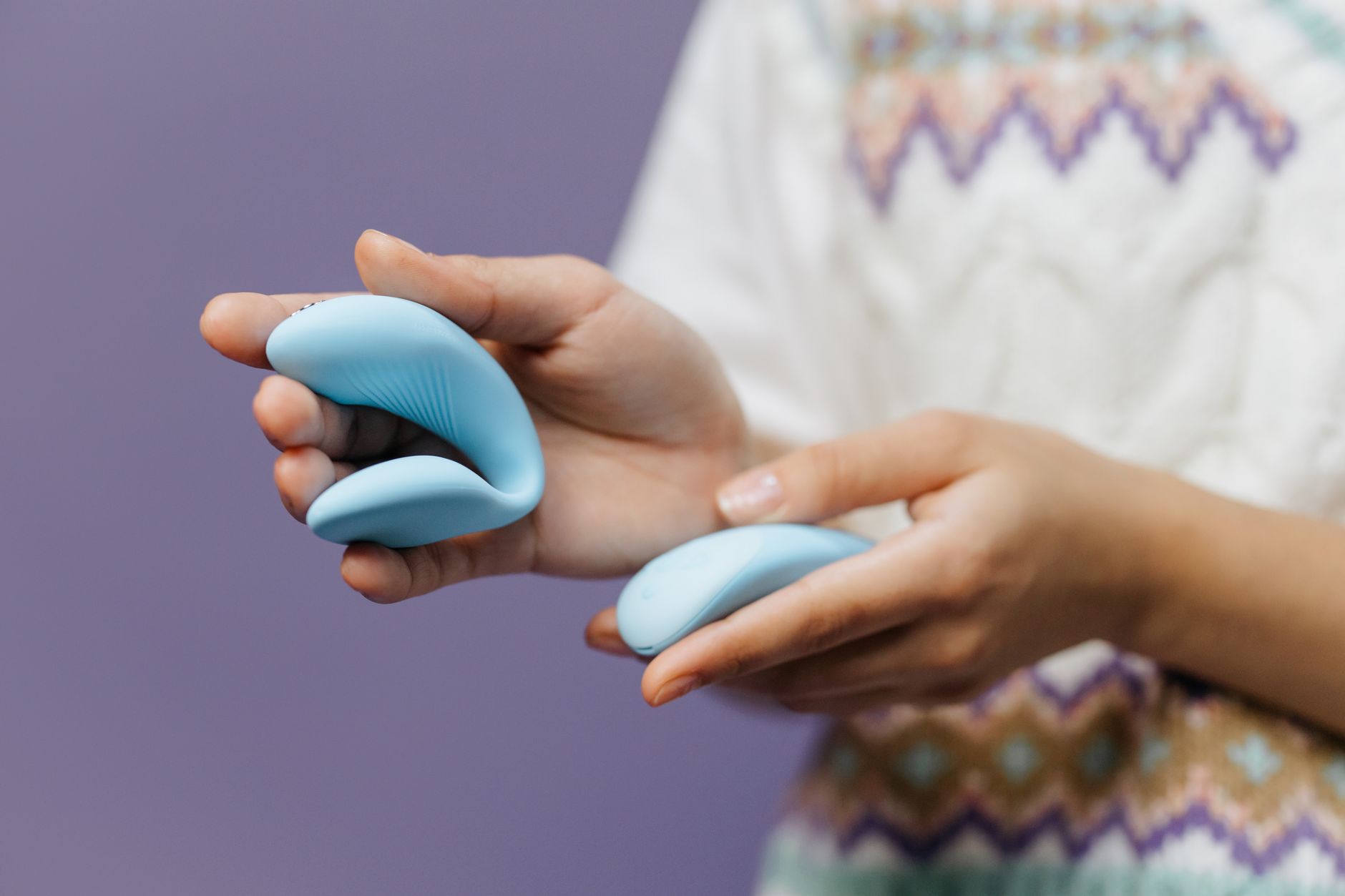
Photo by cottonbro studio on Pexels
And here's something most couples don't realize: when the lower-desire partner experiences quick, easy pleasure through a lemon vibrator, it often increases their baseline desire. They start to remember what pleasure feels like. They're less defended. They want to initiate more because they're not running from the thing anymore.
How to introduce this without it feeling like a workaround
The conversation matters. A lot.
Don't frame it as "you're not satisfying me, so we need a toy." That's still putting the lower-desire partner in the defensive position. Instead: "I've been thinking about how we can both feel good without it being stressful. I want to explore something together."
Then, make it about curiosity, not urgency. "I read that lemon clitoral vibrators are really different from other toys because they feel less intense in certain ways. Want to just try it and see?" Low stakes. No expectation that this becomes your solution forever.
The first time you use a lemon vibrator together, the goal is not orgasm. The goal is novelty and play. Let the higher-desire partner do the exploring. Let them hold the toy, adjust the intensity, pay attention to what makes the other person respond. This puts them back in the driver's seat of generosity rather than waiting.
What typically happens: the higher-desire partner feels their desire met in a new way. The lower-desire partner discovers they can come in five minutes instead of twenty. Both people feel successful. The pressure drops. The next time is easier.
What changes about the relationship beyond just sex
When you solve the desire gap, you solve about fifty other arguments that seem unrelated.
The resentment lifts. The higher-desire partner stops feeling rejected, so they stop needing constant reassurance. The lower-desire partner stops feeling guilty, so they stop being defensive. The dynamic shifts from "one of us is wrong" to "let's figure this out together."
I've watched couples use lemon vibrators as the entry point to conversations they couldn't have before. "Actually, I think my libido dropped because I'm exhausted." Or: "I think I've been avoiding this because I had bad experiences earlier in my life." Suddenly the gap isn't a relationship problem. It's information. It's something to solve together, not something proving one person is failing.
Sex becomes collaborative again instead of competitive.
The practical stuff nobody talks about
A few things that matter in execution:
Start with a toy that's genuinely good. A cheap vibrator will not convince either of you this is worth trying. Lemon clitoral vibrators are engineered specifically so they don't feel intimidating to couples just beginning. The suction mechanism is gentler than direct vibration. The intensity builds gradually. These are features, not flaws.
Lube is not optional. This removes friction (literal and emotional) and makes everything feel more generous and less mechanical.
Do this when you're not tired. A lot of couples try this at 11 p.m. after a long day. You need energy to be playful. You need headspace to be present. Schedule this like you'd schedule a date. That sounds clinical, but it signals that this matters.
Keep talking to each other while it's happening. Check in. Laugh. This isn't a performance. It's not something you're doing at each other.
Why this works better than therapy alone (though therapy helps too)
Therapy gives you language and understanding. You'll figure out why the gap exists. That's valuable. But knowing why doesn't automatically fix the friction.
What fixes the friction is new experience. You need to retrain your nervous system about what sex in your relationship can feel like. You need the lower-desire partner to feel less pressure and more pleasure. You need the higher-desire partner to feel wanted and generative. A lemon vibrator isn't magic, but it's a container that lets both of those things happen.
Think of it as a reset button. You're not erasing the history. You're just creating a new baseline from which to build.
What happens after the initial shift
Most couples I work with find that using lemon sexual toys together for a few months shifts the pattern. The higher-desire partner's framing changes. Instead of "we don't have sex enough," it becomes "we have different types of sex." The lower-desire partner feels more confident. They're not just enduring. They're actually enjoying it.
Some couples use lemon vibrators as a regular part of their routine forever. Some use them as a bridge until the relationship dynamic stabilizes and then naturally move toward other things. There's no one right answer. The point is you've broken the binary and created space for something new.
Mismatched desire doesn't mean you're incompatible. It means you need different tools for different seasons. Lemon clitoral vibrators are exactly that tool.
People Also Ask
Can using a lemon vibrator as a couple make the lower-desire partner feel pressured?
It absolutely can, if it's framed as a workaround instead of exploration. The key is timing and conversation. Introduce it when you're connected, not when one person is frustrated. Frame it as "I want to try something new that feels good for both of us," not "we need to fix your libido." And let the lower-desire partner set the pace. If they're not feeling it, pause. The goal is to remove pressure, not shift it to a toy.
Will a lemon vibrator actually increase my partner's desire long-term?
Likely, yes, but indirectly. When the lower-desire partner has positive, low-pressure sexual experiences, their nervous system relaxes. They stop associating sex with obligation. Over time, that often translates to more interest. But this isn't guaranteed. Some partners have responsive desire (they want sex after it starts) instead of spontaneous desire (they want it beforehand). A lemon clitoral vibrator helps with responsive desire patterns because the experience is so positive that they're more open to initiating next time.
Is using a toy the same as having real sex with my partner?
No, and it's not supposed to be. It's something different. That's the point. When you have a gap in desire, traditional sex feels fraught for both people. A lemon vibrator creates space for a different kind of intimacy that's often less performance-based and more connected. Some couples use toys occasionally. Some use them often. Some use them as foreplay. There's no hierarchy of "real" sex. What matters is that both people are feeling wanted and having pleasure.
What if my partner is really against the idea of toys?
Start with conversation, not the toy. "I've been reading about how couples handle different sex drives, and I came across something interesting. Can we talk about it?" Listen for the "no" underneath the "no." Is it shame? Is it feeling like it means they're not enough? Is it religious values? Is it just never thought about it? Different obstacles need different conversations. If it's truly a hard boundary, respect it. But often, a partner's resistance softens when they understand it's about solving a problem together, not replacing them.
Do lemon vibrators work for all body types and sensitivity levels?
Lemon sexual toys are specifically designed to be gentler than traditional wand vibrators, which makes them accessible to people with higher sensitivity. That said, sensitivity varies widely. Starting on the lowest intensity setting is always smart. And if a lemon vibrator doesn't feel right, that's fine. There are other toys designed for different preferences. The point isn't to force one specific tool. It's to find a tool that feels good to both people in your relationship.
Can we fix our desire gap without using toys?
Yes. You can fix it through deeper conversations about expectations, stress, medical issues, and relationship dynamics. You can fix it through therapy. You can fix it through lifestyle changes like less stress, more sleep, and more non-sexual touch. But toys accelerate the process and give you something concrete to do right now, while you're doing the longer work. Most couples benefit from both.
The bigger picture
Mismatched desire isn't a modern problem. Couples have been navigating this forever. What's changed is that now you have options that actually work. A generation ago, couples just accepted that one person would be frustrated and one would feel guilty forever.
You don't have to accept that. A lemon vibrator isn't a fix for incompatibility. But it is a tool for couples who are fundamentally compatible but just need to reimagine what their sex life can look like.
If you want to talk through what this might look like in your specific relationship, we're here.