The fear your partner probably won't say out loud
Here's the thing: your partner isn't worried you'll leave them for a toy. They're worried the toy means something else. That you're not satisfied. That they're not enough. That intimacy has somehow downgraded from connection to performance.
These fears are understandable and almost never about the toy itself.
The good news? Lemon vibrators, when introduced right, often prove the opposite. They can actually deepen trust and reduce performance pressure. But only if you handle the conversation carefully, and only if you understand what your partner is really defending.
Why partners resist toys (the real reasons)
Most resistance falls into three buckets, and they need different responses.
"Toys will replace me." This usually surfaces as "I thought what we had was enough" or "I don't want you to need something else." What's underneath: anxiety about being adequate. The fix isn't to prove toys aren't replacing anything. It's to reframe what the toy does. A lemon clitoral vibrator doesn't replace manual stimulation. It's a different rhythm, intensity, and sensation that often brings partners closer together, not farther apart.
"This feels like criticism of my technique." Sometimes a partner hears "I want a toy" as "You're not doing it right." Especially if sex has been good, or your partner takes real pride in knowing your body. This one's tricky because some of it might be true. But introducing a toy doesn't mean your partner failed. It means your body changed, your preferences shifted, or you're exploring something new together. There's a difference.
"I'm uncomfortable with that level of explicitness." Some partners grew up with messaging that toys are weird, shameful, or only for people whose relationships are broken. They're not defensive about their own capacity. They're uncomfortable with the category itself. This requires patience and sometimes a reframe: toys are tools, like lube or condoms. They're not a referendum on the relationship.
How to start the conversation (without defensiveness)
Timing is everything. Not during sex, not when you're frustrated, not when they're stressed about work. Pick a calm evening when you're both relaxed and have 30 minutes.
Start with curiosity, not a proposal.
"I've been thinking about something and I want to talk about it without you feeling like I'm criticizing anything. Can we do that?"
Then name the fear directly, on their behalf.
"I know sometimes people worry that if a partner wants to explore toys, it means the relationship isn't working. I want to be totally clear that's not what this is about for me. I'm curious about exploring something, and I genuinely want to do it with you, not instead of you."
Then give them the real reason. Not "my body isn't responding well to what we're doing" unless that's true. Instead: "I've read about clitoral vibrators like lemon suction toys, and I'm curious what that sensation would feel like. I think it could be fun for us to try together."
The word "together" matters. You're not bringing in a toy. You're exploring something as a team.
Then stop and listen. Don't defend. Don't explain away their concerns. Let them talk.
What to do if they say no (the first time)
You get one of three answers: yes, maybe, or no.
If it's no, don't push. Instead, ask what the specific concern is. "What would need to be different for you to feel okay with this?" Sometimes it's not about the toy at all. It's about feeling disconnected, or worrying you're not attracted to them, or something they haven't articulated yet.
If the answer is no because of genuine discomfort with the category, you have a choice. You can drop it, or you can ask for time. "I respect that. Could we revisit this in a few months? I'm not asking for a yes right now, just for you to stay open."
Sometimes a no becomes a yes because trust builds, or because your partner sees you're serious and not leaving. Sometimes the no stays, and you make a decision about what that means for you. Both are okay.
If they say maybe or yes: how to introduce it
Don't open the box on a Tuesday for random sex. The first time you use a lemon vibrator together should feel intentional.
Schedule it like you would a nice dinner. "I'm thinking Thursday night after we get the house quiet. Just us, no rush." This removes the spontaneity that can feel jarring and signals that you're taking it seriously.
Start clothed. Show your partner the toy. Explain what it does. Let them hold it, feel it in their hand, see that it's not intimidating. A lot of partner resistance dissolves when they realize it's small, quiet, and not a threat to their role.
Then during sex, when you're already aroused, introduce it slowly. Maybe your partner uses it on you while you're kissing. Maybe you use it on yourself while they're inside you, or while they're stimulating you manually. The point is: they're present, involved, and watching what happens to your body.
This is where the shift happens. Watching your partner respond visibly to sensation, seeing them more aroused, experiencing you more present and satisfied. That's when a toy stops being a threat and becomes something that enhances the experience for both of you.
The awkwardness is temporary

Photo by cottonbro studio on Pexels
The first time is almost always a little weird. Your partner might feel uncertain about where to touch you or how to incorporate it. You might feel self-conscious. That's normal. It doesn't mean this is a bad idea.
Second and third times are smoother. By the fourth or fifth, it's just part of your sexual repertoire. Your partner sees that the toy deepens pleasure without replacing them. You see that your partner can be curious and open, even when they started skeptical.
This is actually how deeper intimacy builds. You showed vulnerability by asking for what you wanted. Your partner showed courage by trying something that made them uncomfortable. You both learned that wanting something new doesn't mean anything is broken.
What lemon vibrators actually do (the reframe)
If your partner is still worried, here's what might help: explain the mechanism.
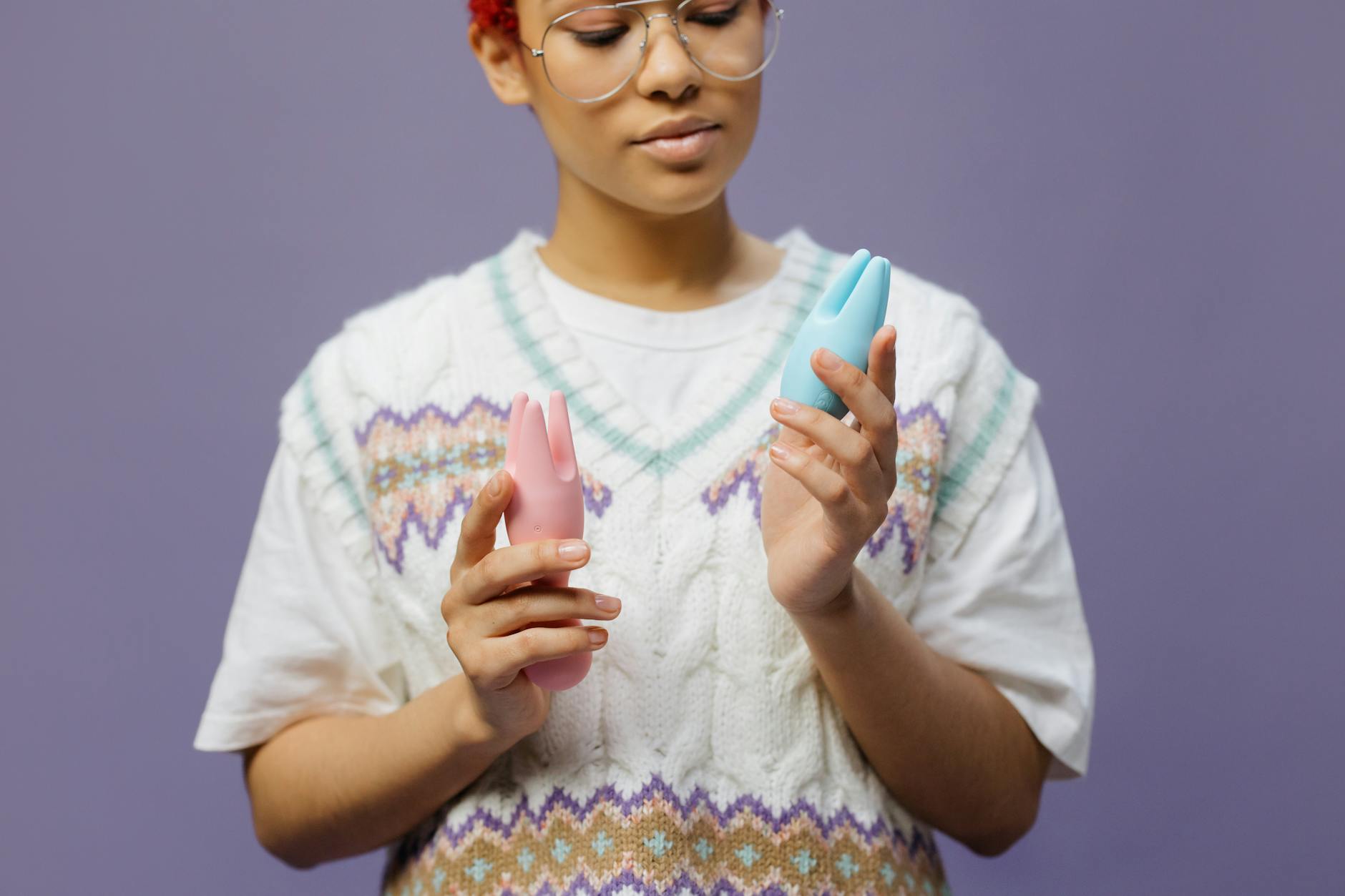
A lemon clitoral vibrator uses suction and gentle pulsing, not aggressive vibration. Many people find it creates a sensation that's closer to oral sex than traditional vibrators. The stimulation is rhythmic but not constant, which often allows for more sensation variety and better orgasms.
For partners, this means the toy isn't replacing anything they do manually. It's creating a specific sensation that deepens arousal and can make it easier to orgasm. That's not a substitute for connection. That's a tool that makes connection more pleasurable.
You might also mention that how lemon vibrators help when your partner wants more stimulation than you do often strengthens couples by reducing pressure and increasing satisfaction on both sides.
When the resistance is really about something else
Sometimes a partner's resistance to toys has nothing to do with toys. It's about control, or insecurity, or a relationship that's struggling in other ways.
If your partner is unwilling to discuss it, dismisses your needs entirely, or makes you feel ashamed for asking, that's a different conversation. That's about respect and equality in the relationship, not about a toy.
In that case, talking to a couples counselor might matter more than any introduction technique. You deserve a partner who's willing to explore with you, even if they're nervous at first.
FAQ: Lemon vibrators and hesitant partners
What if my partner thinks I'm unattracted to them if I want a toy? Show them data if it helps. Most people who use toys with partners report increased intimacy and satisfaction. A toy is a tool, not a statement about your partner's attractiveness. It's about sensation variety and deepening pleasure together.
Can I use a lemon vibrator solo first, then tell my partner? You can, but it's riskier. Partners often feel less threatened if they're part of the exploration from the start. If you've already used one, reframe it: "I tried it alone and it was great. I think it could be even better if we used it together."
What if we try it and my partner hates it? That's fine. You tried something together and it didn't click. You can let it go, or you can ask what made them uncomfortable and try to address it next time. Not every tool works for every couple.
How do I bring it up if we haven't really talked about sex in general? This is harder, but the approach is the same. Start with "I'd like us to talk more openly about what we both enjoy. I have something I'm curious about and I want to explore it with you. Can we start there?" Sometimes the toy conversation opens a bigger conversation about intimacy.
Is there a specific way to use a lemon vibrator that feels less intimidating to partners? Yes. Start with lower intensity settings. Have your partner use it on you first, rather than you using it on yourself. Let them feel in control and see what happens. This often reduces the threat feeling.
What if my partner agrees but seems resentful during sex? Stop and check in. "This doesn't feel good. What's going on?" Sometimes partners need time to process. Sometimes they need reassurance. Sometimes they weren't as ready as they said. Don't push through resentment. Pause and revisit the conversation.
The real thing that usually happens
Your partner is nervous. You introduce a lemon vibrator gently. Your partner sees you more aroused, more satisfied, more present. They realize the toy isn't replacing them. It's expanding what's possible together.
Then one night, your partner suggests using it again. Or they initiate more sex because the pressure is off. Or they stop worrying about technique because they see it's not about perfect fingers. It's about varied sensation, which a toy provides beautifully.
The intimacy doesn't decrease. It usually deepens because you've both chosen vulnerability, curiosity, and each other's pleasure over staying in a comfortable pattern.
If you're struggling with how to navigate this conversation, talking with a couples counselor or exploring resources about sexual communication can help too. The goal isn't to force your partner to accept toys. It's to build the kind of partnership where you can both ask for what you want and actually hear each other.
Your desire for exploration matters. Your partner's nervousness also matters. The good news? They're usually not in conflict. They just need a patient conversation, a willingness to listen, and the time to build trust that pleasure can expand without threatening connection.