Let's start here: opioids numb more than pain
If you're taking opioid medication for chronic pain, fibromyalgia, post-surgical recovery, or injury, your doctor probably told you about drowsiness, constipation, and nausea. Nobody mentioned that the medication would also muffle your ability to feel pleasure, want sex, or orgasm. Which is fair, because saying that out loud is awkward in a medical office. But it's real, it's common, and it's fixable.
Opioids work by binding to opioid receptors throughout your nervous system, including in your brain's pleasure centers. They reduce pain signals by making your entire nervous system less reactive. That's great for a broken leg. It's terrible for sensation. Many people on opioid therapy report that their genitals feel numb, distant, or like they're behind glass. Orgasm becomes harder to reach or flattens into something that doesn't feel worth the effort.
Here's the thing: this doesn't mean your capacity for pleasure is broken. It means you need a different approach.
Why sensation gets quieter on opioids
Three mechanisms are happening at once.
First, opioids lower dopamine and increase endogenous opioid activity in the reward pathways of your brain. That means the normal cascade of neurochemicals that builds anticipation and desire gets dampened. You're not choosing to not want sex. Your brain is literally producing fewer of the chemicals that create that want.
Second, opioids slow down your central nervous system. Arousal requires escalation, a building intensity. When your nervous system is already slowed and muffled, that escalation is harder to generate. It's like trying to dance when everything is in slow motion.
Third, some opioids (particularly long-acting formulations) reduce blood flow to the genitals. Less blood flow means less engorgement, less physical responsiveness, and less of the mechanical feedback loop that usually builds sensation.
None of this means you should tough it out or resign yourself to a sexless period. It means you need tools that force the nervous system to pay attention, even when medication is telling it to stay quiet.
Why lemon clitoral vibrators work when sensation is muted
A suction-style vibrator like the Lem works differently than traditional vibrators, and that difference becomes crucial when you're dealing with opioid-induced numbness.
Traditional vibrators stimulate through rapid vibration. The problem: when your nervous system is already dampened, vibration alone might not be intense enough to break through. You'd need to crank the intensity to uncomfortable levels, and you'd risk desensitizing the tissue further.
Lemon sucker vibrators (also called clitoral suctiontoys) create pulsing suction around the clitoris. This does something different. It's not just stimulation; it's a change in pressure that the nervous system registers as novel and demanding attention. Suction also increases blood flow to the area by design, which is especially helpful when opioids are reducing it. The combination of suction + the sensations it creates is often strong enough to cut through the medication-induced numbness without requiring extreme settings.
Many of my clients on opioid therapy find that they can reach orgasm on medium settings with a lemon vibrator when they couldn't reach it at all with other toys. The neural pathway is different enough that it bypasses the dampening effect.
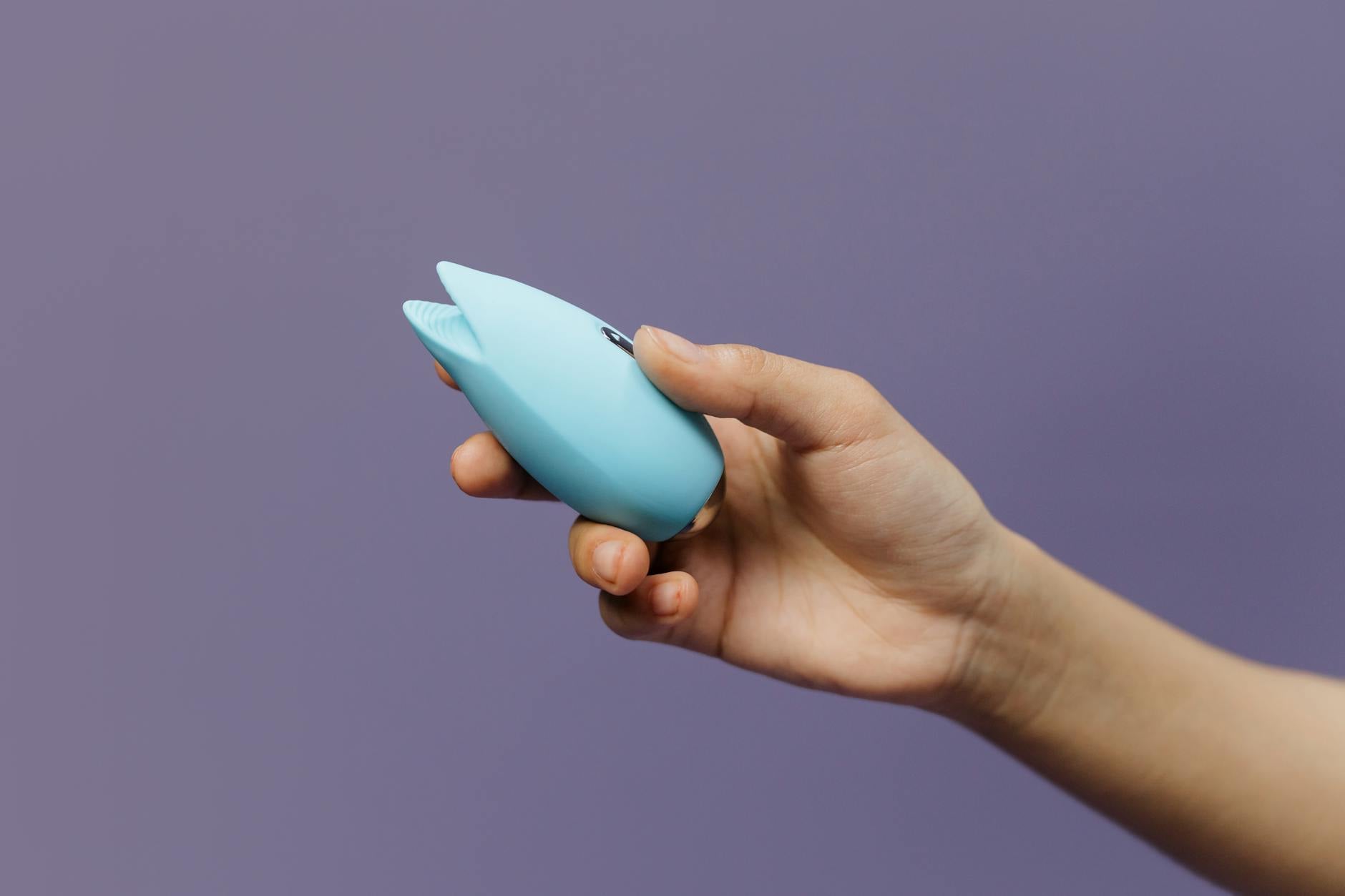
Photo by cottonbro studio on Pexels
Practical adjustments when you're on opioids
If you're using a lemon clitoral vibrator while taking opioids, four things will make a real difference.
Start lower and stay patient. You might be tempted to jump to a higher intensity right away because lower settings feel like nothing. Resist that. Give settings 1 and 2 at least five minutes each before moving up. Your nervous system needs time to recognize and register the sensation, especially if it's been dampened for weeks or months. Jumping straight to maximum intensity trains your body to need maximum to respond, which backfires.
Extend your warm-up time. A typical warm-up might be 10 to 15 minutes. When you're on opioids, budget 20 to 30. That's not extra time wasted; it's time your nervous system needs to build arousal despite the medication pulling in the opposite direction. Use this time to let your mind wander into fantasy, read erotica on your phone, or just breathe and notice what small sensations are present.
Use lubrication, even if you don't think you need it. Opioids can reduce natural lubrication (they dry out everything). A water-based lubricant around the vulva and a tiny bit around the suction cup edge of a lemon vibrator changes everything. It reduces friction, makes the suction feel less like static and more like pulsing pressure, and honestly just helps your brain register more sensation because there's less resistance.
Try using it during or shortly after you take your medication. This sounds counterintuitive, but here's why: opioid levels peak in your bloodstream 30 to 60 minutes after you take the dose. If you're taking medication for pain management, wait until you've taken a dose, let it kick in (so you're comfortable), then explore yourself. You want pain managed and to be present for sensation. Some people find that window between "pain is controlled" and "I'm fully drowsy" is actually workable. Test this for yourself.
The conversation with your doctor
Lowered libido and sexual dysfunction are listed side effects of opioid therapy in the clinical literature. They're common enough that they show up in research. They're not common enough that your doctor brings them up unprompted.
If you want to explore options, the conversation starts with your GP or pain specialist, not your sex therapist. Ask them directly: "I've noticed my sexual function has changed since starting this medication. Are there alternatives, or can we talk about managing this side effect?"
They might offer to:
Switcher to a different opioid (some have fewer sexual side effects than others).
Reduce your dose if pain management allows it.
Add a medication that counteracts sexual dysfunction (sometimes a low dose of an SSRI antidepressant can help, which sounds weird but works for some people).
Adjust your dosing schedule (taking medication at night instead of during the day, for example).
None of these are guaranteed, and opioid tapering or switching has to be medically supervised. But the conversation is worth having. Your doctor can't help with something they don't know is bothering you.
When pleasure returns partially, not fully
Here's what I tell clients: medication-induced numbness doesn't always flip off like a light switch. It often fades gradually, and you might find that sensation returns in stages. Maybe orgasm comes back first, but it feels less intense. Maybe you regain desire but still need longer warm-up times. Maybe you find that you need the lemon sucker vibrator to reach orgasm even as other sensations return.
All of that is normal. Your nervous system got used to being muffled. It doesn't necessarily snap back to baseline the moment medication changes. Patience here isn't weakness; it's accurate biology.
If you're working with a partner, how to use lemon vibrators with a partner who prefers manual stimulation becomes relevant. Your partner might need reassurance that using a toy isn't about them; it's about managing a medication side effect. That's a conversation worth having early.
Building back pleasure while managing pain
The goal here isn't to white-knuckle your way to an orgasm in spite of medication. It's to work with your nervous system, using tools that are strong enough to get its attention even when it's been told to stay quiet.
A lemon clitoral vibrator is one of those tools. Extending your warm-up time is another. Talking to your doctor is a third. None of these alone solves the problem, but together they give you a real path forward.
Your pleasure matters, even (and especially) when managing chronic pain or recovery. That's not selfish. That's self-preservation.
People also ask
How long does it take for opioid-induced sexual dysfunction to improve if I switch medications?
It varies. Some people notice improvement within days of switching to a different opioid or reducing their dose. Others take weeks or even a few months as their nervous system recalibrates. If you're also addressing it with tools like suction-style vibrators, sensation often returns faster because you're giving your nervous system something to respond to in the meantime. Talk to your doctor about what timeline to expect with your specific medication change.
Can I use a lemon vibrator if I'm also taking antidepressants alongside opioids?
Yes. In fact, you might need to. Some antidepressants (SSRIs) also reduce sexual function, but the numbing effect is often different from opioid numbing. A few clients find that combining an SSRI with an opioid creates a stacked numbness that takes a stronger tool to break through. A lem vibrator's suction mechanism often works well in this scenario because it's different from the stimulation type that SSRIs usually interfere with. Talk to your doctor or pharmacist about your specific medications if you're concerned about interactions, but vibrator use itself won't interact with anything.
Is it normal for an orgasm to feel different or less intense when I'm on opioids, even with a vibrator?
Completely normal. Opioids don't just affect sexual sensation; they dampen the entire nervous system's responsiveness. So yes, an orgasm might feel smaller, shorter, or less overwhelming than it used to. That doesn't mean the vibrator isn't working or that you're doing something wrong. As your body adjusts to medication (or if your dose changes), the intensity usually increases. In the meantime, the goal is to reconnect with pleasure at whatever level is available right now, not to recreate what you felt before medication.
Should I tell my doctor I'm using a vibrator while on opioids?
You don't have to, but there's no medical reason not to. Your doctor isn't going to judge, and if you mention you're managing opioid-induced sexual dysfunction with tools like a clitoral vibrator, they'll know their medication strategy is working on the pain side and you're addressing the side effect responsibly. Some doctors find this information useful for adjusting your treatment plan. Others will just note it in your file. Either way, it's not a red flag.
Can opioid-induced numbness be permanent?
Not if you address it. If you stop taking opioids or your dose decreases, sensation returns. If you stay on the same opioid long-term without adjusting, sexual dysfunction tends to stay too. But nothing about it is permanent in the sense of lasting forever. Your nervous system will respond to changes. Sometimes that response takes time, but it happens.
Why does my partner think I don't want them if I'm having trouble with sensation?
Because you can't see opioid-induced numbness. From their perspective, you're less interested, less responsive, less enthusiastic. They don't know it's the medication; they might think it's them. Why lemon vibrators work better for couples navigating mismatched desire goes deeper into this. But the short version: tell them. Specifically, tell them "My medication is reducing my sensation and desire, and I'm using tools to manage it. This isn't about you or how I feel about you." Then show them you're taking it seriously by actually using those tools. Action communicates better than reassurance alone.
If you're navigating opioid side effects and sexual dysfunction, you're not alone, and you're not stuck. Sensation can come back. Pleasure can return. It just takes the right approach, the right tools, and patience with yourself while your nervous system learns to feel again. If you have questions about your specific situation, reach out to us at Nancy Com or talk to your healthcare provider about what options might work for you.